The Night I Almost Lost Everything
It was a rainy Tuesday back in 2026, long before the AI-integrated trading platforms of 2026 became the norm. I had just purchased a shiny new Expert Advisor (EA) that promised 20% monthly returns. I loaded it onto MetaTrader 5, toggled the ‘Allow Algorithmic Trading’ button, and went to sleep feeling like a genius. By 3:00 AM, a sudden spike in the JPY pairs triggered a cascade of trades. Because I hadn’t properly configured the mt5 expert advisor risk management settings, the bot opened fifteen positions at once. By dawn, my account balance looked like it had been through a paper shredder.
That painful morning taught me a lesson every trader eventually learns: a great strategy without robust risk management is just a slow-motion car crash. Today, as we navigate the hyper-volatile markets of 2026, those settings are your only line of defense against the unexpected. If you’re letting an algorithm handle your hard-earned money, you owe it to yourself to understand every single variable in that ‘Inputs’ tab.
The Engine Room: Understanding Lot Sizing and Position Risk
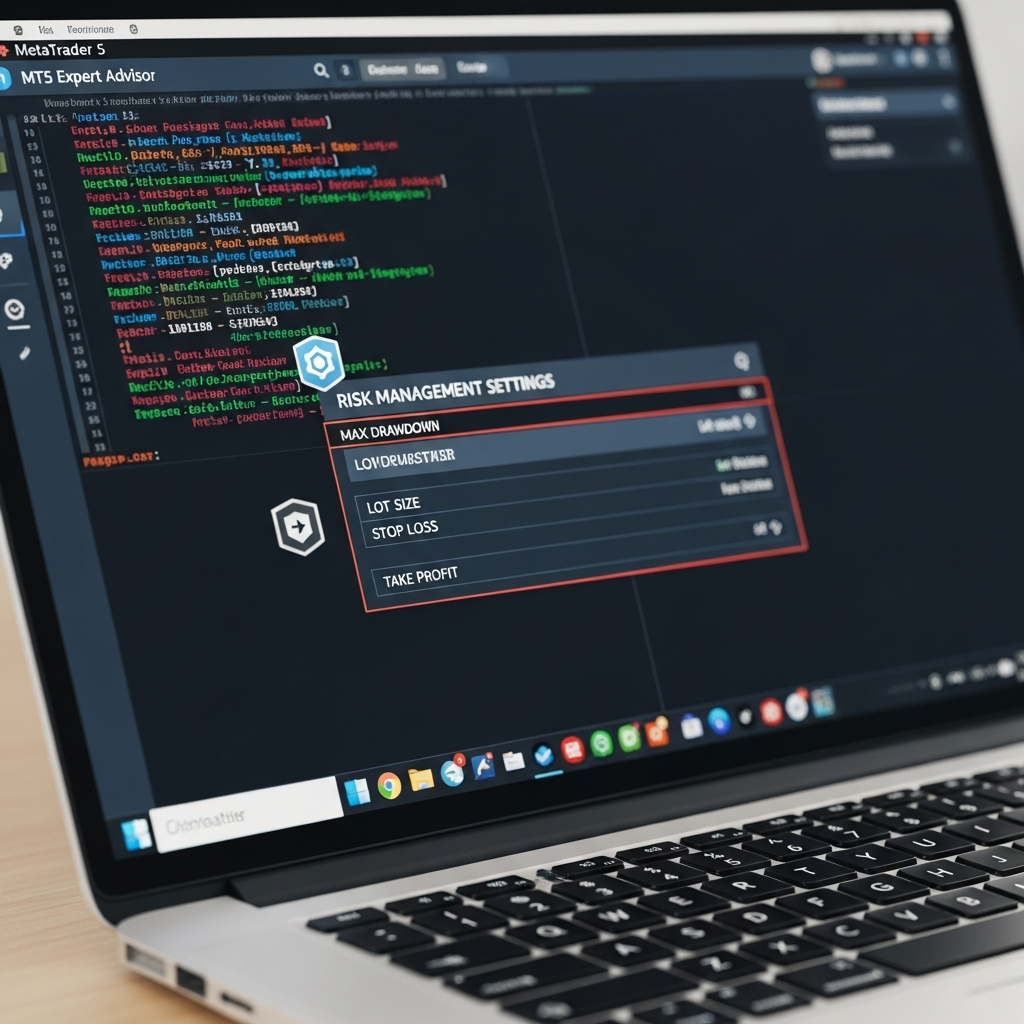
When you open the properties of any EA, the first thing you’ll usually see is the volume or lot sizing section. This is the foundation of all mt5 expert advisor risk management settings. Most beginners make the mistake of using a ‘Fixed Lot’ size because it’s easy to understand. They think, “Oh, 0.10 lots isn’t much.” But 0.10 lots on a $1,000 account is vastly different from 0.10 on a $10,000 account.
Fixed Lots vs. Dynamic Percentage Risk
In 2026, with the speed of market shifts, I always recommend looking for a ‘Risk Percent’ setting. This dynamic approach calculates your position size based on a percentage of your current equity or balance. If you set it to 1%, and you hit a losing streak, your position sizes naturally shrink, preserving your capital. Conversely, as your account grows, your lot sizes scale up automatically. This is how you achieve compound growth without manually recalibrating your bot every weekend.
If your EA doesn’t have a dynamic risk option, you’re stuck in the dark ages. You’ll find yourself constantly tweaking numbers, which defeats the purpose of automation. Always check if your EA allows for ‘Auto-Lot’ based on balance. It’s the difference between a scalable business and a dangerous hobby.
The Invisible Safety Net: Stop Loss and Take Profit
It sounds basic, doesn’t it? Yet, I see dozens of EAs sold today that use ‘Hidden’ or ‘Virtual’ stop losses. The idea is to prevent ‘broker hunting,’ where the broker supposedly targets your stop. Let’s be real: in 2026, reputable ECN brokers don’t care about your 0.1-lot stop loss. What they *do* care about is execution.
A virtual stop loss only exists within the EA’s code. If your internet goes down, or if the MT5 platform crashes, that virtual stop loss doesn’t exist on the server. Your trade could stay open indefinitely while the market moves against you. For any mt5 expert advisor risk management settings configuration, I strongly advocate for ‘Hard’ Stop Losses—the ones sent directly to the broker’s server. It’s your insurance policy against a power outage or a server glitch at your VPS provider.
The Logic of Trailing Stops
Why let a winning trade turn into a loser? A trailing stop is a beautiful piece of code that moves your stop loss into profit as the price moves in your favor. If you’re setting up an EA for a trend-following strategy, the trailing stop settings are arguably more important than the entry signal itself. Look for ‘Trailing Start’ (when the trailing begins) and ‘Trailing Step’ (how often it updates). Setting these too tight will get you stopped out by minor noise; setting them too wide means you leave too much money on the table when the trend reverses.
The “Panic Button”: Global Account Drawdown Limits
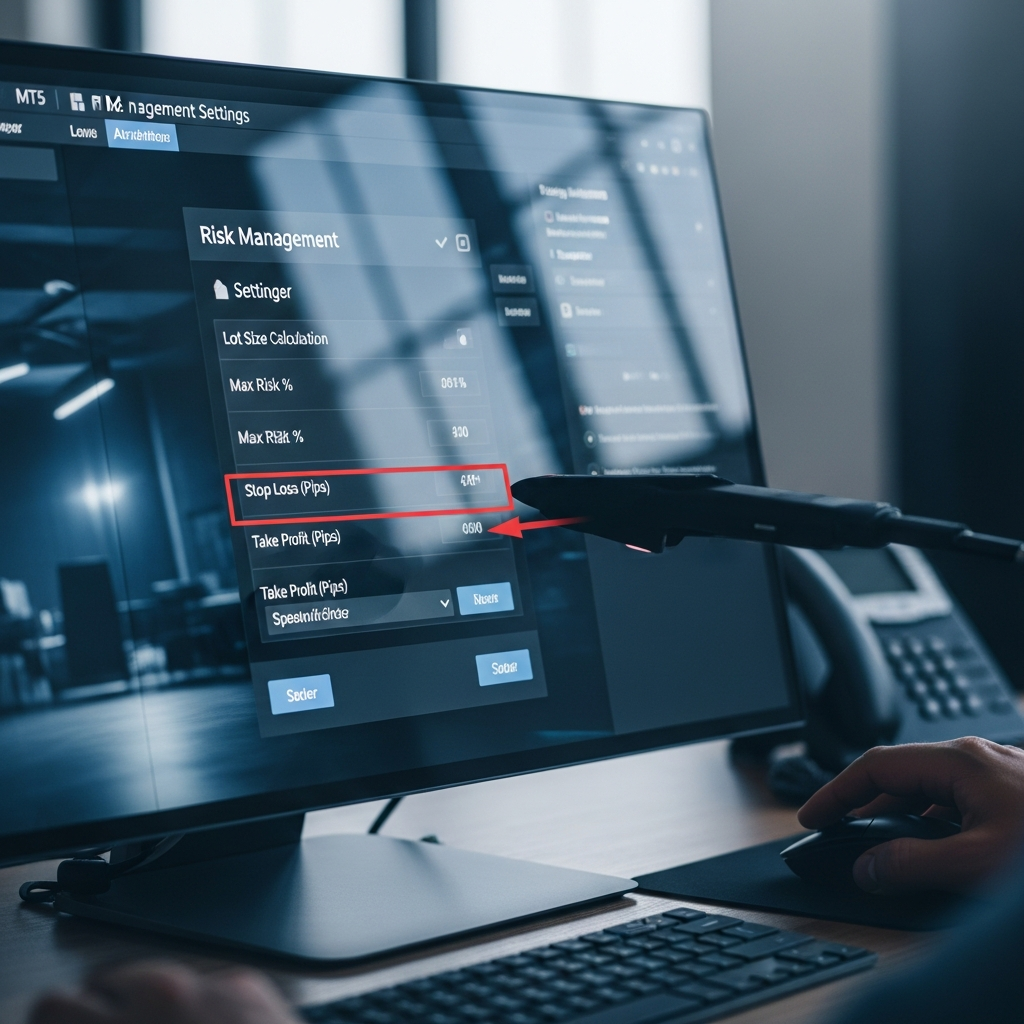
One of the most advanced mt5 expert advisor risk management settings you should look for—or request from your developer—is the Global Account Protection. Modern EAs are often ‘multicurrency’ or ‘multi-symbol.’ They might look fine on one pair but go rogue across five others simultaneously.
A global drawdown limit acts as a circuit breaker. You might tell the EA: “If my total account equity drops by 5% in a single day, close all trades and stop trading for 24 hours.” This prevents the dreaded ‘death spiral’ where an EA keeps opening new trades to recover losses from old ones. In the fast-paced 2026 environment, where flash crashes can happen in seconds due to AI-driven institutional flows, having a hard equity stop is the only thing that will keep you in the game for the long haul.
Filtering the Noise: Time and News Restrictions
Not all hours are created equal. An EA designed for the quiet Asian session will likely get slaughtered during the New York open or during a high-impact news event like a central bank interest rate announcement. When digging into your mt5 expert advisor risk management settings, look for a ‘News Filter’.
These filters often connect to an economic calendar and can automatically pause the EA 30 minutes before and after high-volatility events. Similarly, time filters allow you to restrict the bot from trading on Friday afternoons when liquidity dries up and spreads widen. Wide spreads are the silent killer of automated strategies. If your EA tries to enter a trade when the spread is 50 points instead of 5, you’re starting that trade in a deep hole that’s hard to climb out of.
Martingale and Grid: The Red Flags
We need to have a serious talk about Martingale. For those who don’t know, Martingale is a strategy where you double your trade size every time you lose. It looks amazing on a backtest—a smooth, upward equity curve that seems invincible. But it’s a mathematical certainty that eventually, you will hit a move long enough to wipe out your entire account.
If you see settings in your EA labeled ‘Multiplier,’ ‘Lot Step,’ or ‘Grid Distance,’ proceed with extreme caution. These are the most dangerous mt5 expert advisor risk management settings in existence. If you must use them, ensure your ‘Max Lots’ is capped and that you have a hard ‘Equity Stop’ in place. Most traders who survive more than a year in this business eventually move away from pure Martingale systems because the stress of a potential ‘margin call’ isn’t worth the steady small gains.
The Reality Check: Backtesting with Real Suffixes
Before you ever go live, you have to run a strategy test. But here’s the kicker: backtests in MT5 are only as good as the data and the settings you provide. When testing your mt5 expert advisor risk management settings, don’t just test for profitability. Test for ‘Max Drawdown.’
If your backtest shows a 20% drawdown over three years, expect a 40% drawdown in real life. Why? Because the backtest doesn’t account for slippage, latency, or the psychological pressure you’ll feel when you see those red numbers on your mobile app while you’re trying to have dinner with your family. I always suggest running a ‘Stress Test’ in the MT5 Strategy Tester. Increase the spread and delay by 50% and see if the EA still survives. If it breaks, your risk settings are too aggressive for the real world.
Setting Up for Success in 2026
As we move further into 2026, the complexity of the markets continues to grow. We’re seeing more ‘fake-outs’ and faster reversals. Your mt5 expert advisor risk management settings shouldn’t be static. I make it a habit to review my EA settings every month. Has the average daily range (ADR) of the EURUSD increased? If so, my stop loss might need to be wider to give the trade room to breathe.
Also, pay attention to the ‘Magic Number’ setting. This isn’t strictly for risk, but if you’re running multiple EAs on one account, each must have a unique Magic Number. If they don’t, one EA might try to manage or close the trades of another, creating a chaotic mess that can lead to massive unintended losses. It’s a small detail, but in the world of automation, small details are the difference between a yacht and a cardboard box.
A Quick Checklist for Your Input Tab
- Max Spread: Does the EA stop trading if the spread is too high?
- Max Slippage: Is there a limit on how much price deviation is allowed?
- Daily Loss Limit: Is there a cap on how much can be lost in 24 hours?
- Lot Sizing: Is it set to a fixed value or a percentage of equity?
- Stop Loss Type: Is it a ‘Hard’ stop or a ‘Virtual’ stop?
- Trade Management: Does it use a break-even function to remove risk early?
Configuring these mt5 expert advisor risk management settings isn’t just about protecting your money; it’s about protecting your peace of mind. The whole point of using an EA is to free up your time. If you’re constantly staring at the screen, worried that the bot will do something stupid, you haven’t set up your risk management correctly. Take the time to do it now. Dig into the manual, test the settings on a demo account for at least two weeks, and never risk money you can’t afford to lose. The markets will always be there tomorrow, but your capital won’t be if you’re reckless today.
Happy trading, and may your drawdowns be small and your profits be steady!