The Heartbeat of the Market: Why Scalping is Different
You’re sitting there, staring at a 1-minute chart. The candles are flickering like a pulse. Your heart rate might even be syncing up with the price action. This is the world of scalping—a high-octane, high-frequency environment where seconds feel like hours and a single pip can be the difference between a win and a loss. But here’s the brutal reality that many traders realize too late: it doesn’t matter how good your entry signal is if your risk per trade percentage for scalpers is calibrated incorrectly. You can win nine times out of ten and still see your account balance drop if your risk management is sloppy.
In 2026, the markets are faster than they’ve ever been. With high-frequency trading algorithms and AI-driven liquidity shifts, a human scalper needs to be more disciplined than a Swiss watch. I’ve seen incredibly talented traders—people who could read price action like a book—wipe out their entire capital in a single afternoon. Why? Because they treated risk like an afterthought. They focused on the ‘how much can I make’ rather than the ‘how much am I willing to lose.’ Let’s change that narrative right now.
The 1% Rule: Why It’s Not Always Best for Scalpers
If you’ve spent five minutes on a trading forum, you’ve heard the golden rule: ‘Never risk more than 1% of your account on a single trade.’ For a swing trader who takes maybe two trades a week, that’s fantastic advice. It’s safe. It’s sustainable. But for a scalper? Risking 1% per trade might actually be a recipe for disaster. Think about it. A scalper might take 20, 30, or even 50 trades in a single session. If you hit a losing streak—which happens to the best of us—and you’re losing 1% every time, you could be down 10% of your account before your first coffee break. That is a massive psychological hill to climb back up.
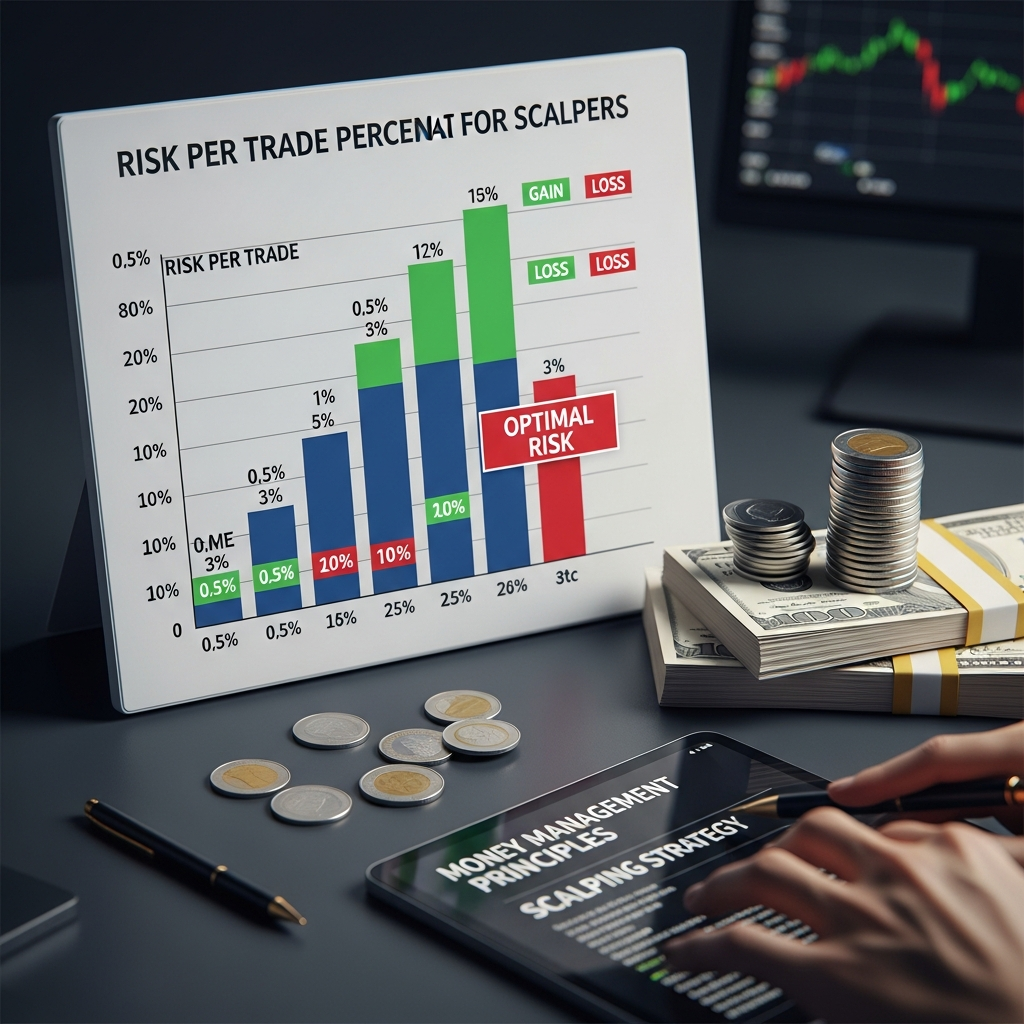
When we talk about the risk per trade percentage for scalpers, we have to look at the volume. Scalping is a game of probability played over a high number of iterations. Your risk needs to be small enough to survive a statistical ‘bad run’ while being large enough to make the effort worthwhile. For most professionals I know in 2026, 1% is the absolute ceiling, not the standard. Many operate much lower, and for very good reason.
Defining the Sweet Spot: 0.1% to 0.5%
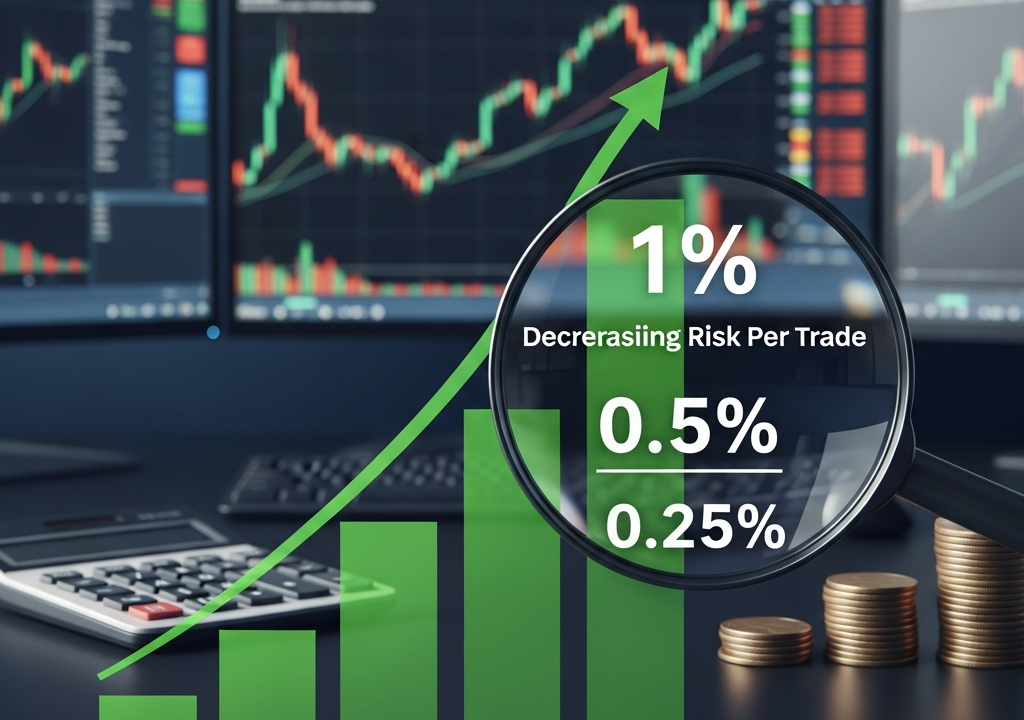
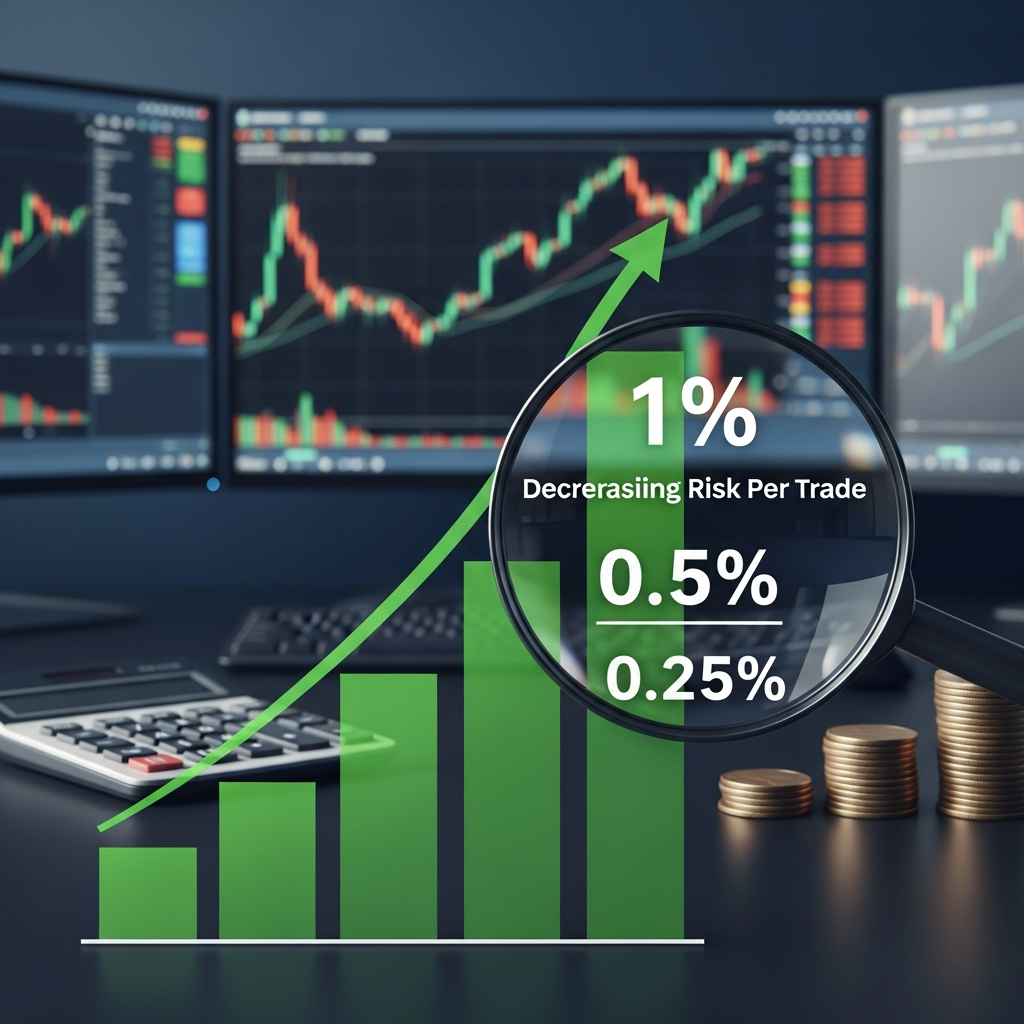
So, what is the magic number? While every trader has a different appetite for volatility, the most sustainable risk per trade percentage for scalpers usually falls between 0.1% and 0.5%. Now, I know what you’re thinking: ‘That sounds tiny! How am I supposed to get rich on 0.1%?’
The answer lies in the frequency. If you are taking dozens of trades a day, those small percentages compound. More importantly, this micro-risk approach protects your mental capital. When you only risk 0.25% on a trade, a loss doesn’t feel like a punch to the gut. It feels like a minor business expense. You can move on to the next setup without the baggage of ‘revenge trading’ or the desperate need to ‘make it back.’ In the world of scalping, your brain is your most valuable asset. If you fry your nerves by risking too much, you’re done.
The Math of the Micro-Risk
- Account Size: $10,000
- 0.25% Risk: $25 per trade
- 10 Consecutive Losses: You’re only down $250 (2.5%)
- Recovery: Still very manageable and psychologically easy to handle.
Compare that to someone risking 2% per trade. After 10 losses, they are down 20%. To get back to break-even, they now need a 25% return. The math gets exponentially harder the more you lose. For a scalper, whose edge is often paper-thin, staying away from that ‘mathematical cliff’ is the only way to survive long-term.
The Hidden Enemy: Spreads, Slippage, and Commissions
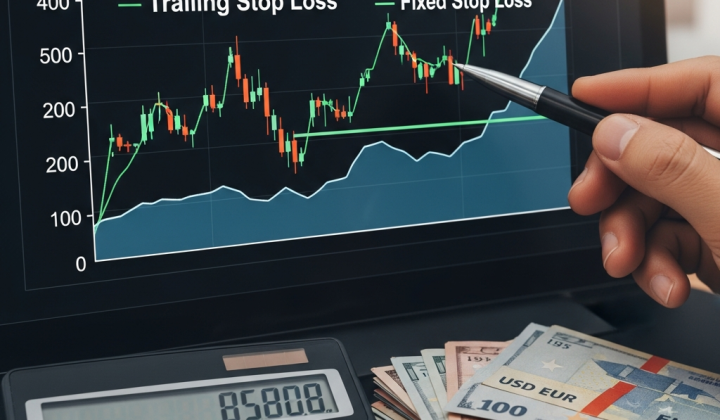
Here is something people rarely mention when discussing the risk per trade percentage for scalpers: the cost of doing business. When you are scalping for 5 or 10 pips, the spread isn’t just a minor annoyance; it’s a significant portion of your risk. If the spread is 1 pip and your stop loss is 5 pips, you are already 20% ‘in the hole’ the moment you click buy or sell.
In 2026, liquidity is deep, but volatility can still cause slippage. If you risk 0.5% of your account based on your stop loss, but slippage pushes that loss to 0.7%, your risk management plan is already failing. This is why many successful scalpers actually calculate their risk *including* the commission costs and a ‘slippage buffer.’ They might aim to risk 0.4% to leave that 0.1% wiggle room for the realities of execution. It sounds obsessive, but this level of detail is what separates the people who trade for a living from those who treat it like a trip to Las Vegas.
Psychology and the “Death by a Thousand Cuts”
There is a unique psychological phenomenon in scalping often called ‘death by a thousand cuts.’ This happens when a trader uses a very small risk per trade percentage for scalpers but ignores their total daily exposure. They think, ‘It’s only 0.2%, no big deal,’ and they keep clicking. Before they know it, they’ve lost 30 trades in a row because they were fighting a trend or the market was sideways. Even at 0.2% per trade, 30 losses is a 6% drawdown.
To avoid this, you need a two-tier risk system. Tier one is your per-trade risk. Tier two is your daily ‘uncle’ point. If you lose 2% or 3% of your total account in one day, you walk away. No exceptions. No ‘just one more trade.’ The beauty of scalping is that the market will be there tomorrow with a thousand more opportunities. Protecting your capital today ensures you have the bullets to shoot tomorrow.
Adjusting Risk Based on Market Volatility
The markets don’t stay the same all day. The London open is a different beast compared to the late New York session. Smart traders adjust their risk per trade percentage for scalpers based on the environment. If the ATR (Average True Range) is spiking and the market is moving erratically, it might be wise to drop your risk from 0.5% down to 0.2% or even 0.1%. You’re still participating, but you’re acknowledging that the ‘noise’ in the market is higher, and the chance of being stopped out prematurely is greater.
Conversely, when you see a ‘perfect’ setup—one where multiple timeframes align and the volume is backing you up—you might push to the higher end of your risk range. But notice I said ‘higher end,’ not ‘double your risk.’ Consistency is the name of the game. If you normally risk 0.2% and suddenly jump to 2% because you ‘feel’ good about a trade, you aren’t trading a strategy anymore; you’re gambling on your intuition. And intuition is a fickle friend in the world of 2026 high-frequency trading.
The Role of Leverage in Scalping Risk
Leverage is a double-edged sword that scalpers often swing a bit too wildly. Because scalpers target small price movements, they often use higher leverage to make those movements meaningful in dollar terms. This is fine, provided your risk per trade percentage for scalpers remains the fixed anchor of your strategy. The problem occurs when traders confuse leverage with risk.
Using 100:1 leverage doesn’t mean you have to risk more of your account. It just means you can control a larger position with less margin. Your stop loss should still be placed at a technical level where your trade idea is invalidated, and the lot size should be calculated so that hitting that stop loss results in exactly your pre-determined risk (e.g., 0.3%). If you find that your stop loss is so tight that the spread alone stops you out, you don’t need more leverage—you need a better entry or a wider stop with a smaller position size.
Position Sizing Tools: Your Best Friend
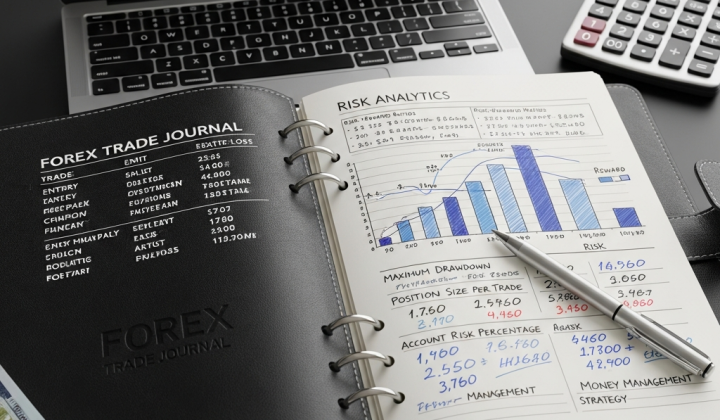
You cannot do the math for your risk per trade percentage for scalpers in your head while the market is moving. It’s impossible. By the time you’ve calculated your lot size for a 6.4 pip stop on a $12,450 account, the entry is gone. In 2026, there is no excuse not to use position sizing scripts or tools. Whether you’re using MT5, cTrader, or a proprietary platform, you should have a tool where you simply drag your stop loss line, and it automatically calculates the lots required to risk exactly 0.25% (or whatever your number is).
These tools remove the ‘math anxiety’ from trading. They allow you to focus entirely on execution. When you know that every time you click ‘Buy,’ your maximum downside is fixed and controlled, you trade with a level of calm that is unattainable for the guy ‘winging it’ with standard lots. That calm is your edge.
Common Pitfalls to Avoid
Even with a solid plan for risk per trade percentage for scalpers, there are traps waiting for the unwary. One of the biggest is ‘scaling in’ to a losing trade. It’s the classic scalper’s trap: price moves against you, so you add another position, thinking it will surely bounce soon. Now, instead of risking 0.5%, you’re risking 1%, then 2%. This is how a single bad trade turns into a catastrophic account wipeout. If your trade is wrong, it’s wrong. Take the small hit and move on. The market doesn’t owe you a recovery.
Another pitfall is ignoring the news calendar. Scalping during a high-impact news event (like an NFP release or a central bank rate decision) makes your risk per trade percentage for scalpers almost irrelevant because the slippage can be so extreme that your stop loss is jumped over entirely. Professional scalpers usually flatten their positions minutes before major news and wait for the dust to settle. It’s not about being afraid; it’s about being professional.
Building a Long-Term Career as a Scalper
If you want to be doing this years from now, you have to treat your trading account like a business. Every business has overhead. In trading, your overhead is your losses. By keeping your risk per trade percentage for scalpers low, you are ensuring that your business can survive a lean month. I’ve known scalpers who had a 40% win rate but were still profitable because their winners were slightly larger than their losers and their risk was so tightly controlled that they never hit a ‘breaking point’ drawdown.
Scalping is a marathon run at a sprinter’s pace. It’s exhausting, it’s mentally taxing, but it’s also one of the most rewarding ways to interact with the financial markets. When you master the art of the micro-risk, you stop being a gambler and start being a technician. You begin to see the charts not as a way to get rich quick, but as a series of probabilities to be managed. That shift in mindset, backed by a disciplined risk per trade percentage for scalpers, is what ultimately leads to the consistent equity curve we all strive for.
Stop looking for the perfect indicator. It doesn’t exist. Start looking at your risk settings. That’s where the real profit is made. It’s in the trades you take with discipline, the losses you cut without hesitation, and the unwavering commitment to protecting your capital at all costs. In the fast-paced world of 2026, the disciplined scalper is the one who stays in the game while the gamblers fade away.