
The Great Trading Tug-of-War: Why Most Traders Get It Wrong
I remember sitting in front of three monitors back in the day, watching a 75% win rate vanish into a blown account in less than a week. It didn’t make sense. I was winning most of my trades! I felt like a genius every Monday through Thursday, only to feel like a total failure by Friday afternoon. The problem wasn’t my ability to predict the market; it was my complete misunderstanding of how the risk reward ratio impact on win rate actually dictates whether a bank account grows or shrivels up like a raisin.
Most people come into trading 2026 with a gambler’s mindset, looking for the “holy grail” indicator that tells them where the price is going 90% of the time. But here is the cold, hard truth: you can be right 30% of the time and get rich, or you can be right 90% of the time and go broke. It all comes down to the delicate, often frustrating balance between these two metrics. If you’ve ever felt like you’re running on a treadmill—winning small but losing big—you aren’t alone. You’re just fighting the math.

Defining the Mechanics of the Risk Reward Ratio Impact on Win Rate
Let’s strip away the fancy jargon for a second. Your Risk Reward Ratio (RRR) is simply how much you are willing to lose to find out if you are right, versus how much you stand to gain if you are. Your Win Rate (WR) is how many times out of a hundred you actually walk away with a profit. These two are not independent variables; they are two sides of the same coin, constantly pulling at each other.
Think of it like a seesaw. When you aim for a massive reward—say, risking $100 to make $500 (a 1:5 ratio)—your win rate will naturally drop. Why? Because the market has to move much further in your direction without hitting your stop loss first. Conversely, if you only want to make $10 by risking $100 (a 10:1 inverse ratio), your win rate will be sky-high because the market barely has to move to hit your target. But one single loss wipes out ten wins. That is the fundamental risk reward ratio impact on win rate in action.
The Mathematical Breakeven Point
You don’t need a PhD in mathematics to survive in the markets in 2026, but you do need to understand the breakeven formula. This is the lightbulb moment for most struggling traders. The formula is: Required Win Rate = 1 / (1 + Reward).
- At a 1:1 ratio, you need to win 50.1% of the time to be profitable.
- At a 1:2 ratio, you only need to win 33.4% of the time.
- At a 1:3 ratio, you only need to win 25.1% of the time.
When you look at it this way, the pressure to be “right” starts to lift. You realize that you can be wrong most of the time and still drive a nice car. The risk reward ratio impact on win rate is your safety net, provided you have the discipline to let the math work its magic.
The Psychological Trap of High Win Rates
Human beings are biologically wired to hate losing. Our brains process a financial loss in the same centers where we process physical pain. This is why so many traders gravitate toward strategies with high win rates. It feels good to see green on the screen eight times out of ten. It boosts the ego. It makes you feel like you’ve mastered the chaos of the markets.
However, this is where the danger lies. To achieve a 90% win rate, most traders end up widening their stop losses or “averaging down” on losing positions. They are essentially trading a high win rate for a catastrophic risk reward ratio. They might make $100 on nine trades, but on the tenth trade, they refuse to admit they’re wrong and lose $2,000. Their high win rate gave them a false sense of security, but the risk reward ratio impact on win rate eventually caught up with them, leaving their account in the red.
Shifting your focus from “being right” to “being profitable” is the hardest transition you will ever make. It requires you to embrace losing as a standard business expense, much like a restaurant owner accepts that some food will go to waste. If your RRR is 1:3, you can lose two-thirds of your trades and still be fine. Once that sinks in, the anxiety of trading starts to dissipate.

How to Find Your “Sweet Spot” in 2026
There is no universal “best” ratio. Some of the most successful hedge fund managers in 2026 operate on a 30% win rate with massive rewards, while high-frequency scalpers might aim for a 65% win rate with smaller targets. Finding your own sweet spot depends heavily on your personality and the timeframe you are trading.
The Scalper’s Dilemma
If you are trading on the 1-minute or 5-minute charts, you are dealing with a lot of noise. In these environments, aiming for a 1:5 risk reward ratio is incredibly difficult because the natural volatility will likely hit your tight stop loss before the price reaches your distant target. Scalpers often have to settle for a 1:1 or 1:1.5 ratio, which means their risk reward ratio impact on win rate requires them to be very accurate—usually above 55%.
The Swing Trader’s Edge
If you have a day job and trade the daily or 4-hour charts, you have the luxury of time. You can catch major trends. Here, you can easily aim for 1:3 or 1:4 ratios. You might only take three trades a month, and you might lose two of them, but that one winner pays for the losers and adds a significant chunk to your equity. The lower frequency of trading allows the risk reward ratio impact on win rate to work in your favor over a longer horizon.
Visualizing the Equity Curve
Have you ever looked at a backtest and wondered why the line looks so jagged? That’s the visual representation of your strategy’s math. A high-win-rate strategy usually has a very smooth equity curve that occasionally takes a massive, vertical dive. A high-RRR strategy has an equity curve that looks like a series of small steps downward (the small losses) followed by huge leaps upward (the big wins).
You need to ask yourself which curve you can psychologically handle. Can you handle ten small losses in a row? Most people can’t. They start tweaking their strategy, changing indicators, or doubling their position size to “get it back.” This emotional volatility is what kills most traders, not the math itself. Understanding the risk reward ratio impact on win rate allows you to anticipate these streaks. If you know your win rate is 40%, you should expect—mathematically—to occasionally hit a streak of 6 or 7 losses. When it happens, you won’t panic because you knew it was coming.
Practical Steps to Optimize Your Ratio
Now that we’ve established how these two forces interact, how do you actually apply this to your trading plan tomorrow? It’s not about just picking numbers out of a hat. It’s about alignment.
1. Audit Your Recent Trades
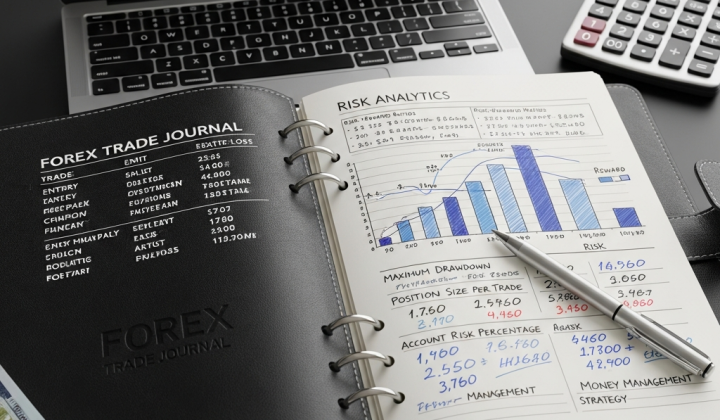
Open your trading journal—and if you don’t have one in 2026, you’re essentially gambling. Look at your last 50 trades. Calculate your actual win rate and your average RRR. Many traders find that they plan for a 1:2 ratio but execute a 1:0.8 ratio because they cut their winners early out of fear and let their losers run out of hope. The risk reward ratio impact on win rate is only useful if you actually stick to the plan.
2. Tighten Your Stop, Don’t Just Extend Your Target
One way to improve your RRR without needing the market to move miles is to refine your entries. If you can enter a trade with a 10-pip stop instead of a 20-pip stop based on better technical analysis, you’ve instantly doubled your potential reward ratio for the same price movement. However, be careful—tightening your stop too much will negatively affect your win rate as you get “wicked out” by minor fluctuations.
3. Use Breakeven Stops Wisely
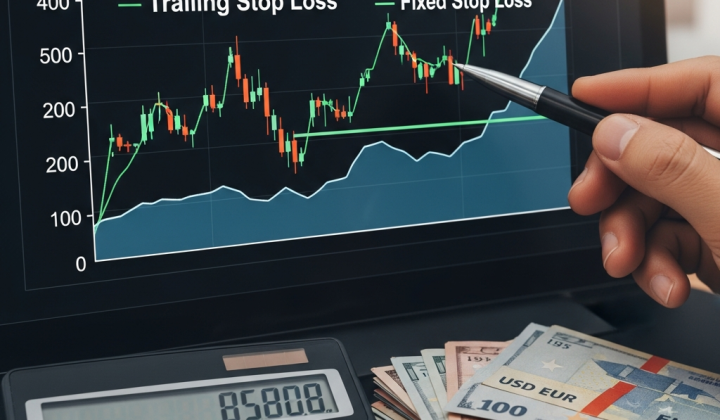
In the modern 2026 trading environment, volatility is high. Moving your stop loss to breakeven once the trade is halfway to your target can protect your capital, but it also lowers your win rate because more trades will end in a $0 gain instead of a full profit. This is a classic example of how adjusting one lever moves the other.
The Role of Modern Technology and AI
By 2026, we have access to tools that make this balancing act much easier. Automated risk managers and AI-driven journaling software can now tell you in real-time if the trade you are about to take is mathematically sound based on your historical performance.
These tools can highlight if your current risk reward ratio impact on win rate is trending toward negative expectancy. Expectancy is the average amount you expect to win (or lose) per trade. If your expectancy is negative, no amount of “mindset coaching” will save you. You are essentially playing a game of roulette where the house has the edge. Use the tech available to ensure your “math house” is in order before you put your hard-earned money at risk.
The Hidden Impact of Commissions and Slippage
We can’t talk about the risk reward ratio impact on win rate without mentioning the silent killers: spreads, commissions, and slippage. If you are aiming for a 1:1 ratio where you risk $10 to make $10, but your broker takes $1 in commission and the spread costs you $1, you are actually risking $11 to make $9.
Suddenly, your 1:1 ratio is actually a 1:0.8 ratio. To stay profitable, your win rate now has to be significantly higher than 50%. This is why many retail traders fail; they don’t account for the fact that the “house” takes a cut of every single flip of the coin. The smaller your targets, the more these costs eat into your edge.
Walking the Path to Long-Term Profitability
Stop obsessing over being right. The market doesn’t care about your ego, and your bank account certainly doesn’t. If you want to survive the next decade in the markets, you have to become a master of the risk reward ratio impact on win rate.
Start by choosing a strategy that fits your personality. If you’re impatient, go for a higher win rate with a modest RRR. If you’re patient and can handle losing streaks, go for the high-RRR home runs. Once you choose, stick to the math. Don’t move your stops, don’t take profits early because you’re scared, and don’t revenge trade.
When you finally grasp that trading is just a game of probabilities, the charts stop being a source of stress and start being a source of opportunity. You’ll realize that every loss is just a data point, and every win is just a result of a well-executed mathematical plan. The risk reward ratio impact on win rate isn’t just a formula; it’s the foundation of every professional trader’s career. Respect the math, and the math will eventually reward you. Keep your head in the game, stay disciplined, and let the ratios do the heavy lifting for you in 2026.