The Moment I Realized Manual Trading Was Killing My Gains
Have you ever sat staring at a screen, your heart hammering against your ribs as you watch a trade go deep into the red? I have. Back in the day, I thought I was a disciplined trader. I had my spreadsheets and my ‘rules’ printed out on a sticky note. But when the market turned volatile, those rules vanished. I over-leveraged, I held onto losers too long, and I cut my winners short because I was terrified of losing what little profit I had left.
That psychological rollercoaster is exactly why I turned to automation. Not just for the entries and exits, but for the one thing that actually determines if you’ll be around next year: risk management. By using an algorithmic money management python script, I took my sweaty palms out of the equation. In 2026, the technology has only gotten better, more accessible, and frankly, more necessary than ever.
We aren’t just talking about a simple calculator here. We are talking about a living, breathing piece of code that guards your capital like a digital fortress. Let’s dive into why you need this and how you can build one that actually works for you.
Why Python is the Gold Standard for Financial Automation
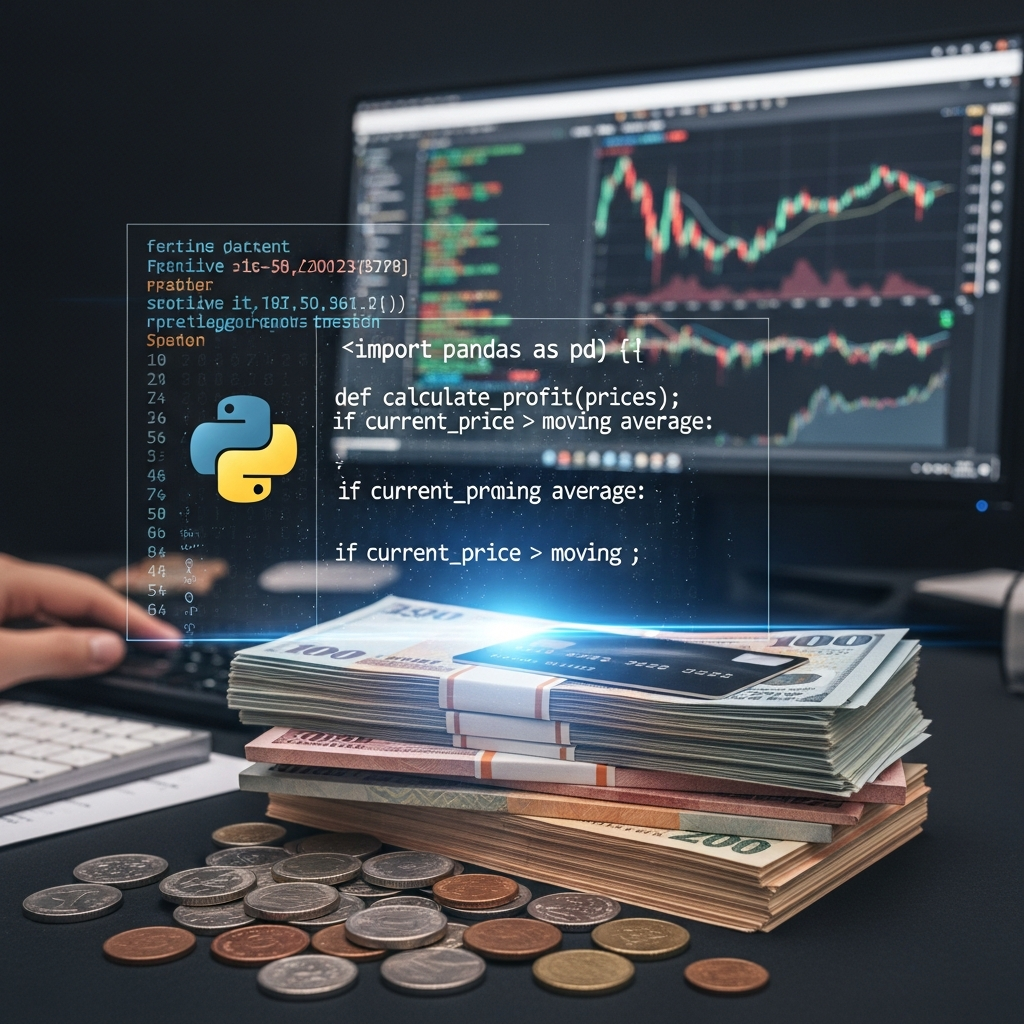
You might wonder why Python? Why not C++ or a dedicated platform script like MQL5? The answer lies in the ecosystem. Python has evolved into the backbone of the financial world. Whether you’re a retail trader or working at a hedge fund, Python’s libraries—Pandas, NumPy, and Scipy—make crunching complex risk models feel like a walk in the park.
When you build an algorithmic money management python script, you aren’t just writing lines of code; you’re leveraging decades of financial mathematics. You can pull real-time data via APIs, calculate your Value at Risk (VaR), and adjust your position sizes across multiple assets simultaneously. Try doing that with a calculator while a 5-minute candle is screaming against your position.
The Core Pillars of Digital Risk Control
- Dynamic Position Sizing: Gone are the days of ‘1 lot per trade.’ A good script calculates size based on current account equity and market volatility.
- Correlated Risk Management: If you are long on BTC and long on ETH, you aren’t diversified; you’re double-exposed. A script can catch this.
- Equity Curves and Circuit Breakers: Just like the big exchanges, your script can shut down trading for the day if you hit a specific loss threshold.
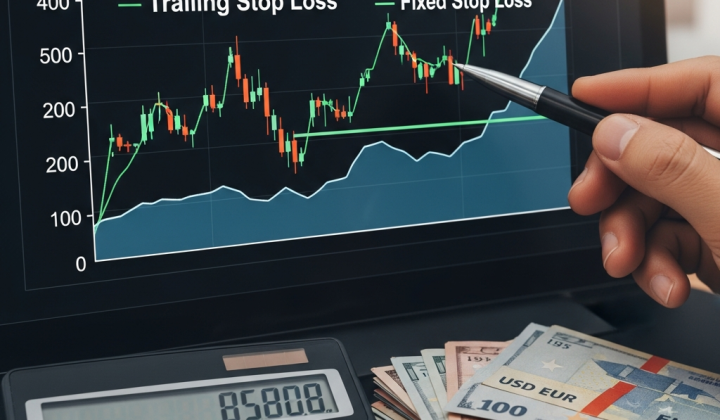
- Automated Trailing Stops: Protecting profits without having to babysit the monitor every second.
Building Your First Algorithmic Money Management Python Script
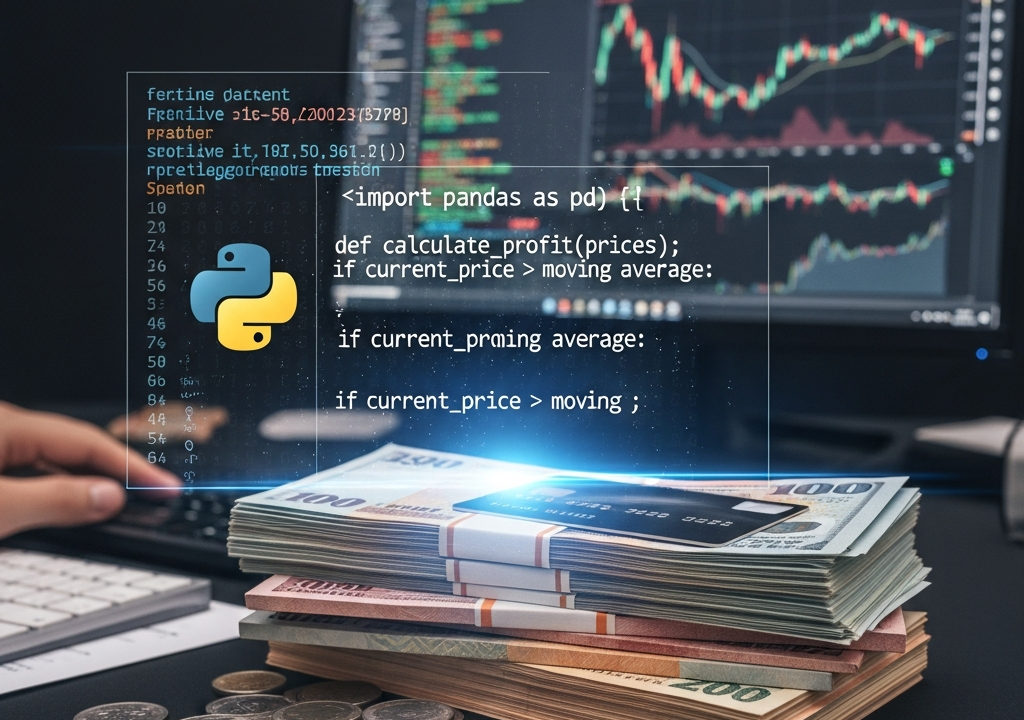
Let’s talk about the ‘guts’ of the system. A basic script doesn’t need to be 5,000 lines long. It just needs to be logical and robust. The goal is to create a function that takes your ‘risk per trade’ as an input and spits out the exact number of units or shares you should buy based on where your stop loss is placed.
I remember the first time I ran my own script. It told me I should only be trading 0.2 lots when my ‘gut’ told me 1.0 lot was fine. The script was right; the market dipped, and had I used 1.0 lot, I would have wiped out 20% of my account. Instead, I lost a measly 2%. That is the power of logic over ego.
The Math: Kelly Criterion or Fixed Fractional?
Your algorithmic money management python script needs a mathematical soul. Most traders start with Fixed Fractional—risking a set percentage (like 1% or 2%) of their total balance per trade. It’s safe, it’s reliable, and it’s easy to code.
However, if you’re feeling adventurous in 2026, you might look into the Kelly Criterion. This formula helps you determine the optimal size for a series of bets to maximize the logarithm of wealth. It’s aggressive and requires a very accurate win/loss ratio, but when coded correctly into Python, it can turn a steady strategy into a powerhouse.
Handling Data Feeds and API Integration
A script is only as good as the data it consumes. In the modern era, we have incredible access to real-time APIs. Whether you are using CCXT for crypto, Alpaca for stocks, or OANDA for forex, your Python script can pull your current balance and open positions in milliseconds.
Here’s a common workflow for a professional-grade script:
- Ping the API: Get your current ‘Net Liquidation Value’.
- Calculate Exposure: Sum up the risk of all current open trades.
- Assess Volatility: Use the Average True Range (ATR) to see how much the market is moving.
- Execute: If the new trade fits within the ‘Total Risk’ budget, send the order. If not, log the rejection.
The Silent Killer: Correlation and Over-Exposure
One mistake I see constantly is what I call the ‘Basket Trap.’ A trader finds three different setups on three different currency pairs and takes them all. What they don’t realize is that all three pairs are highly correlated with the US Dollar. When the Dollar moves, all three trades fail at once.
An algorithmic money management python script can solve this by calculating a correlation matrix. Before placing a trade, the script checks if your portfolio is becoming too heavily weighted in one direction or one sector. If the correlation coefficient is too high, the script reduces the position size of the new trade or blocks it entirely. This is how the pros stay in the game while others are getting liquidated.
Dealing with Drawdowns and ‘Uncle Points’
Everyone has a breaking point—the ‘Uncle Point’ where you just want to give up. For most, this happens during a 20% or 30% drawdown. The beauty of a Python-based management system is that it doesn’t get depressed. It doesn’t feel the need to ‘revenge trade’ to get the money back quickly.
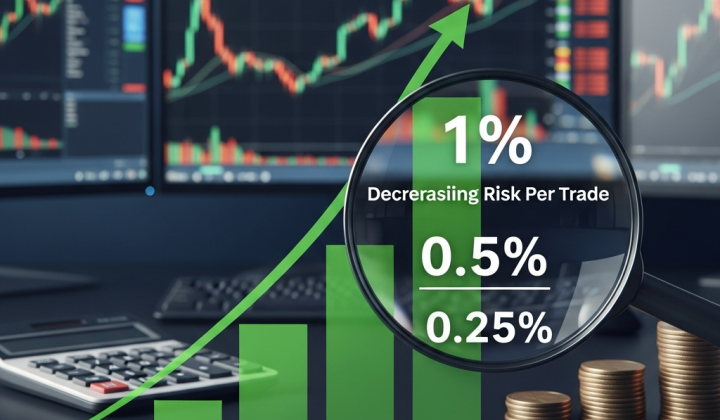
You can program ‘drawdown tiers’ into your script. For example, if your account is down 5%, the script automatically reduces the risk per trade by half. If it’s down 10%, it reduces it again. This creates a soft landing and ensures that you never hit that catastrophic zero. It forces you to earn back the right to trade large sizes.
Future-Proofing Your Strategy in 2026
As we move further into 2026, the integration of Machine Learning (ML) into money management is no longer a luxury—it’s becoming the standard. We are seeing scripts that use Reinforcement Learning to adjust risk parameters based on the current ‘regime’ of the market. Is the market trending? Range-bound? High volatility? The script adapts its aggressive or conservative nature accordingly.
But even with all the AI bells and whistles, the core of a successful algorithmic money management python script remains the same: Protecting your downside. You can have a mediocre entry strategy, but with world-class money management, you can still be profitable. The reverse is never true. A world-class entry strategy with poor money management is just a slow-motion train wreck.
Common Pitfalls to Avoid
I’ve broken a lot of things over the years, and I want to save you the trouble. When writing your script, keep these things in mind:
- Hardcode your limits: Never let an AI or a complex variable decide your absolute maximum loss. Hardcode a ‘Stop Everything’ value that can’t be overridden by the logic.
- Mind the Slippage: In backtesting, everything looks perfect. In real life, you’ll get slipped. Your script should account for a 0.1% to 0.5% slippage on every trade to keep expectations realistic.
- Keep it Simple: You don’t need a neural network to tell you that losing 5% in a day is bad. Start with simple logic and layer on complexity only when you have the data to back it up.
Taking the Leap into Automation
Starting out with an algorithmic money management python script can feel daunting if you aren’t a ‘coder.’ But here is the secret: you don’t need to be a computer scientist. The Python community is incredibly generous. You can find templates, libraries, and forums full of people who have already solved the math problems you’re facing.
The transition from manual fear to algorithmic confidence is the single biggest leap you will take in your financial journey. It changes the game from a gamble to a business. When you know that every trade is mathematically sound and that your ‘ruin probability’ is near zero, the stress simply evaporates. You stop checking your phone every five minutes. You start sleeping better.
So, fire up your IDE, install Pandas, and start building your protector. Your future self—the one with the intact trading account and the calm demeanor—will thank you for it. The markets aren’t getting any easier, but with the right script in your corner, they certainly get a whole lot more manageable.