Ditching the Chart-Watching Fatigue
Let’s be honest for a second. We’ve all been there—staring at a 15-minute Gold chart at 3:00 AM, eyes bloodshot, wondering if that small rejection candle is the start of a reversal or just another liquidity grab. If you are reading this, you probably realized that trading manually while trying to pass a six-figure prop firm challenge is a recipe for high cortisol levels and, eventually, a blown account. It’s stressful, it’s emotional, and frankly, it’s exhausting.
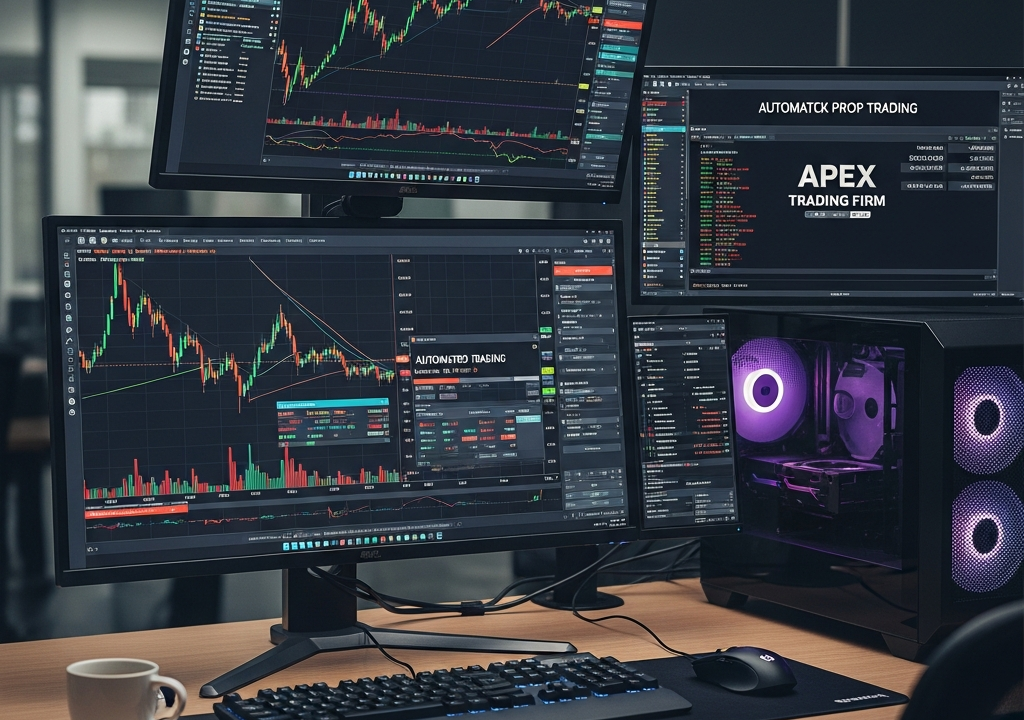
By 2026, the landscape of prop trading has shifted dramatically. Gone are the days when manual price action was the only way to thrive. Today, the smartest players in the game are leaning into an automated prop firm trader MT5 setup to handle the heavy lifting. They aren’t looking for a ‘magic bot’ that prints money while they sleep on a beach (though that’s the dream, right?), but rather a systematic way to execute a proven edge without the human error that usually ruins a funded account.
If you’ve struggled with discipline or just don’t have ten hours a day to sit in front of a monitor, moving toward automation on MetaTrader 5 is the most logical step you can take. But here is the catch: you can’t just drag an Expert Advisor (EA) onto a chart and hope for the best. There’s a specific, technical way to build this machine so it doesn’t fall apart the moment a high-impact news event hits the fan.
Why MT5 is the Standard for Prop Automation in 2026
For years, MT4 was the king, mostly because traders are creatures of habit. However, for a proper automated prop firm trader MT5 setup, the MetaTrader 5 platform is now non-negotiable. Why? Because the prop firms themselves have upgraded. Their servers are faster, their bridge technology is more advanced, and MT5 handles multi-threaded backtesting much better than its predecessor.
When you’re trying to pass a challenge with a strict 5% daily drawdown, every millisecond of execution speed matters. MT5 allows for better hedging, more precise tick-data testing, and a built-in economic calendar that your EAs can actually read to stop trading before the Fed speaks. It’s simply a more robust engine for the high-stakes environment of funded accounts.
Step 1: The Foundation – Picking and Prepping Your VPS
Before we even touch a line of code or a strategy, we have to talk about where your platform is actually living. You cannot—and I mean cannot—run an automated prop setup on your home laptop. If your Wi-Fi flickers or your Windows decides to run an update at 2:00 PM, your trade could be left hanging without a stop loss, and there goes your $200k account.
You need a Virtual Private Server (VPS). But not just any cheap $5/month VPS. You need one located as close as possible to your prop firm’s broker server. If your broker uses a server in London (LD4) or New York (NY4), your VPS needs to be in that same data center. This reduces latency to under 2ms, ensuring your entry prices are exactly what you expect.

Installing MT5 the Right Way
When you get your VPS, don’t just install MT5 normally. I always recommend using ‘Portable Mode.’ By creating a shortcut and adding /portable to the target path, you keep all your data, EAs, and indicators within the installation folder itself. This makes it incredibly easy to move your entire setup from one server to another if you ever need to upgrade without losing your settings.
Step 2: Configuring Your Automated Prop Firm Trader MT5 Setup
Now, let’s get into the guts of the software. Once you’ve logged into your prop firm account on MT5, you need to toggle some very specific settings. Navigate to Tools > Options > Expert Advisors. You’ll want to check ‘Allow algorithmic trading’ and, crucially, ‘Allow DLL imports.’ Many high-end EAs used in 2026 require DLL imports to communicate with external risk management dashboards or news filters.
One trick that seasoned pros use is to limit the number of bars shown on the chart. If you’re running five different pairs, MT5 can get memory-heavy. Go to Tools > Options > Charts and set ‘Max bars in chart’ to something low like 5,000. Your EA doesn’t need to see what happened in 2012 to trade a 5-minute breakout today, and it will keep your VPS running lean and fast.
Step 3: The EA – Quality Over Hype
This is where most people fail. They buy a ‘No Loss’ bot from a sketchy Telegram group. In the world of an automated prop firm trader MT5 setup, you don’t need a bot that wins every time; you need a bot that fails gracefully. Prop firms are designed to catch people who over-leverage. Your automation should focus on consistent, small gains with hard stop losses coded into every single order.
Whether you are using a trend-following system, a mean reversion strategy, or a grid-based approach (be careful with those in prop firms!), ensure the EA is specifically designed for the ‘Prop Firm’ environment. This means it has a built-in equity protector. If the bot sees you’ve hit a 4.5% loss for the day, it should automatically close all trades and disable itself until the next daily reset. This ‘kill switch’ is the only thing standing between you and a ‘Challenge Failed’ email.
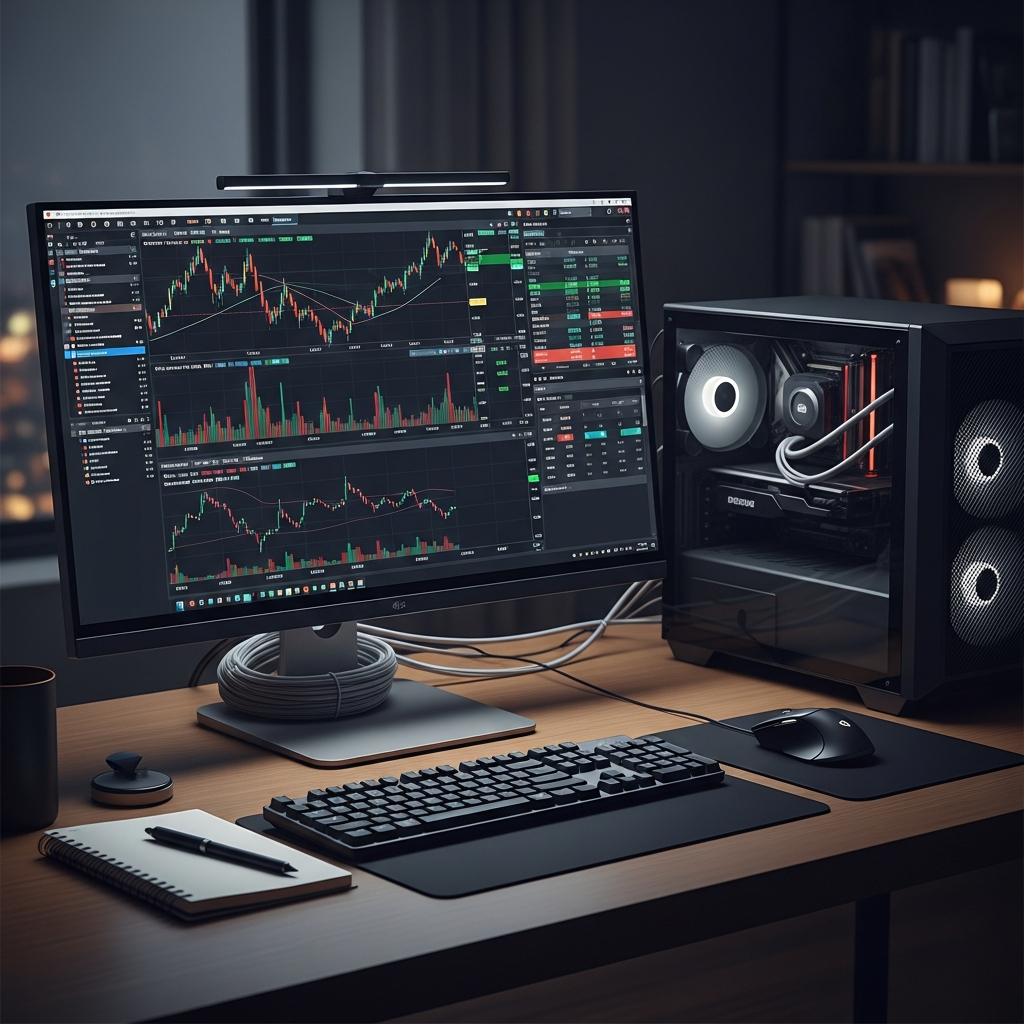
Step 4: Handling the Prop Firm ‘Hidden’ Rules
Setting up the tech is one thing; staying within the rules is another. Most prop firms have evolved. They now look for things like ‘consistency rules’ or ‘gambling behavior.’ If your automated setup takes 50 trades on Monday and 0 on Tuesday, some firms might flag that during the payout phase.
You also need to check the firm’s stance on HFT (High-Frequency Trading). While some allow it for the challenge phase, almost none allow it for live-funded accounts. Your automated prop firm trader MT5 setup should mimic ‘human-like’ execution speeds. Using a ‘randomized’ delay on your entries (even just 500ms) can sometimes help your account stay under the radar of aggressive A-book risk management algorithms that don’t like ‘toxic’ latency arbitrage.
The News Filter: Your Best Friend
In 2026, market volatility during CPI or NFP releases is wilder than ever. Most professional setups use a ‘News Filter’ utility. This is a small tool that runs alongside your EA. You tell it: “Stop trading 30 minutes before high-impact news and resume 60 minutes after.” This prevents your EA from getting caught in a massive slippage event where your stop loss gets jumped by 20 pips, potentially blowing your drawdown limit in a single second.
Step 5: Testing and Optimization (The Boring but Essential Part)
Don’t just throw your setup into a $100k challenge on day one. Run it on a demo account provided by the prop firm for at least a week. Why? Because every broker has different spreads and different ‘slippage’ profiles. A strategy that works perfectly on a raw-spread IC Markets account might fail on a prop firm’s proprietary server due to slightly wider spreads on the EURUSD during the New York open.
Use the MT5 Strategy Tester. But don’t just look at the ‘Total Profit.’ Look at the ‘Max Drawdown’ and the ‘Recovery Factor.’ In the prop world, the recovery factor is king. You need a setup that can get out of a drawdown hole quickly without requiring a 10-trade winning streak.
The Myth of ‘Set and Forget’
I wish I could tell you that once you finish your automated prop firm trader MT5 setup, you can go play golf and never look at a screen again. But that’s a lie. Automation is about leverage, not total abandonment. You are now a ‘Manager of Systems’ rather than a ‘Clicker of Buttons.’
You should be checking your VPS at least twice a day. Check the ‘Experts’ and ‘Journal’ tabs in MT5. Are there any ‘Order Send’ errors? Is the VPS CPU usage spiking? Did the EA fail to close a position due to a ‘Trade Context Busy’ error? These small technical glitches are the silent killers of funded accounts. A human manager spots these in minutes; a ‘lazy’ trader spots them when the account is already gone.
Risk Management: The Final Guardrail
Let’s talk numbers. If your prop firm gives you a 10% total drawdown and a 5% daily drawdown, your automation should be tuned to a ‘Personal Drawdown’ limit. Set your EA to stop for the day if it hits 3.5% or 4%. This gives you a 1% buffer for slippage or swap fees. It’s about creating layers of protection. You want your system to be like an onion—multiple layers of defense before the firm’s hard limit is ever reached.
Also, consider your lot sizing carefully. In 2026, many firms have implemented ‘Lot Size Consistency’ rules. If your bot usually trades 1.0 lots and suddenly jumps to 5.0 lots to ‘recover’ a loss (martingale style), you will likely be disqualified or denied a payout. Keep your position sizing static or based on a very conservative percentage of equity.
The Psychology of Watching a Bot Trade
Surprisingly, the hardest part of an automated prop firm trader MT5 setup isn’t the technical side—it’s the psychological side. Watching your EA go into a 2% drawdown is agonizing. You will feel the urge to step in, close the trade manually, or flip the direction. This is usually when things go wrong. If you’ve done your backtesting and you trust the logic, you have to let the machine work. Manual intervention is the leading cause of ‘system drift,’ where the actual performance of the account diverges from the backtested expectations.
Trust the process, but verify the execution. If the bot is doing exactly what it was designed to do, leave it alone. If it’s behaving in a way you didn’t anticipate, shut it down, go back to the drawing board, and fix the logic in a demo environment.
Where Do We Go From Here?
The journey from a manual trader to a systematic one is the single most important transition you can make in your trading career. By focusing on a solid automated prop firm trader MT5 setup, you are treating trading like a business rather than a hobby. You are removing the weakest link in the chain: your own emotions.
Take it slow. Get your VPS sorted, master the MT5 portable installation, choose an EA with a hard focus on risk management, and never stop monitoring the ‘Journal’ tab. The prop firms are happy to give you their capital, but they want to give it to the traders who have the best systems in place. Be the trader who brings a calculator and a high-speed server to a gunfight. That’s how you get funded, and more importantly, that’s how you stay funded in 2026.