The Math Behind Your Winning Streak (or Losing One)
Have you ever felt like you were doing everything right—following the signals, keeping your stop-loss tight, and watching the charts like a hawk—yet your account balance just seems to stay stuck in a frustrating dance around the same number? You aren’t alone. In my first three years of trading, I was a master of the ‘break-even cycle.’ I’d make $500 on Monday and lose $510 by Thursday. It felt like I was running on a treadmill that was slightly tilted against me.
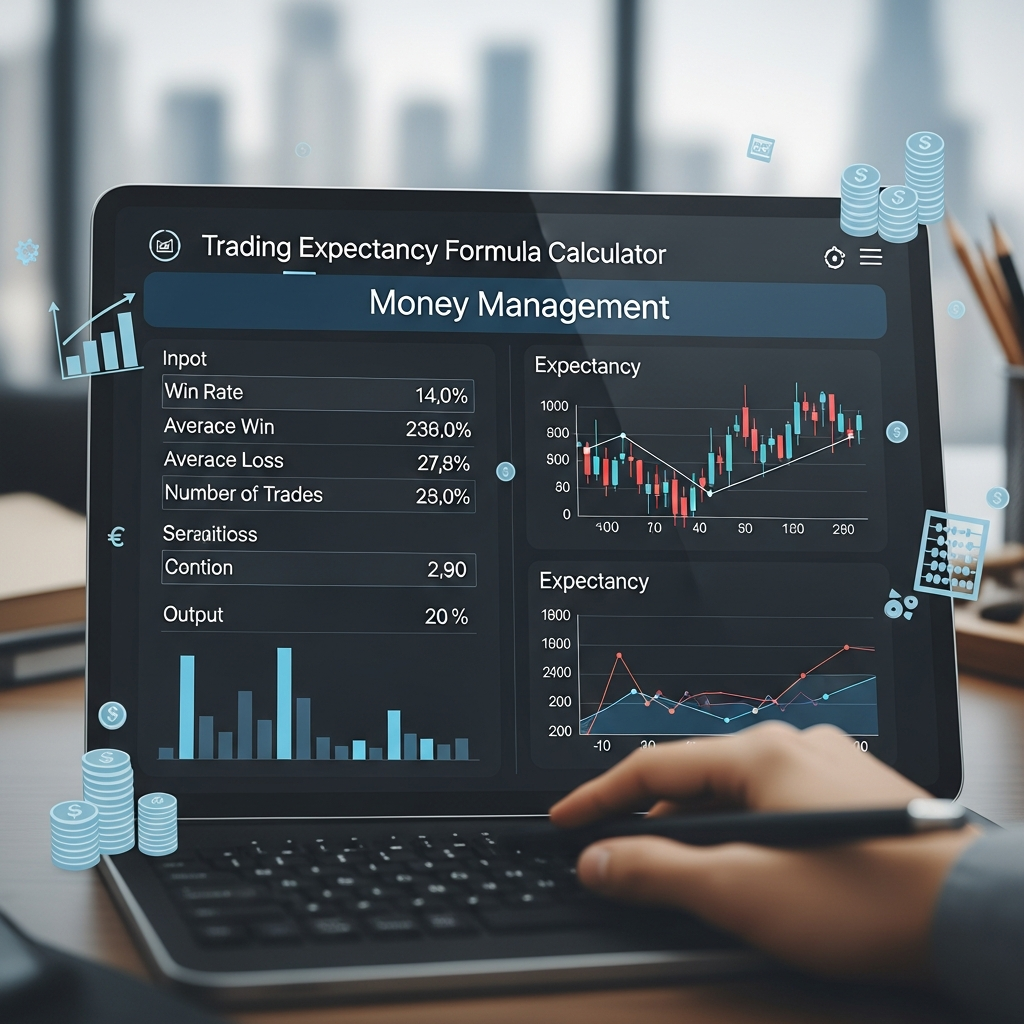
The turning point wasn’t finding a secret indicator or a 90% win-rate strategy. It was when I finally sat down and realized that trading is essentially a game of probability. To win, you don’t need to be right every time; you just need to ensure that the math is on your side. That is where a trading expectancy formula calculator becomes your most valuable tool. It shifts your focus from the anxiety of a single trade to the statistical reality of a thousand trades.
What Exactly Is Trading Expectancy?
Before we dive into the numbers, let’s talk about what expectancy actually means in plain English. Imagine you own a casino. You know that on any given night, a high roller might walk in and win a million dollars. That doesn’t scare you. Why? Because the ‘expectancy’ of every game in your building is skewed in favor of the house. Over thousands of bets, you know exactly how much you will make per dollar wagered.
As a trader, you are the house. Your trading strategy is the game. Expectancy is the average amount you can expect to win (or lose) per dollar at risk. If your expectancy is positive, you have a ‘trading edge.’ If it’s negative, no matter how hard you work or how many hours you spend staring at candles, you are mathematically guaranteed to go broke eventually.
The Core Components of the Calculation
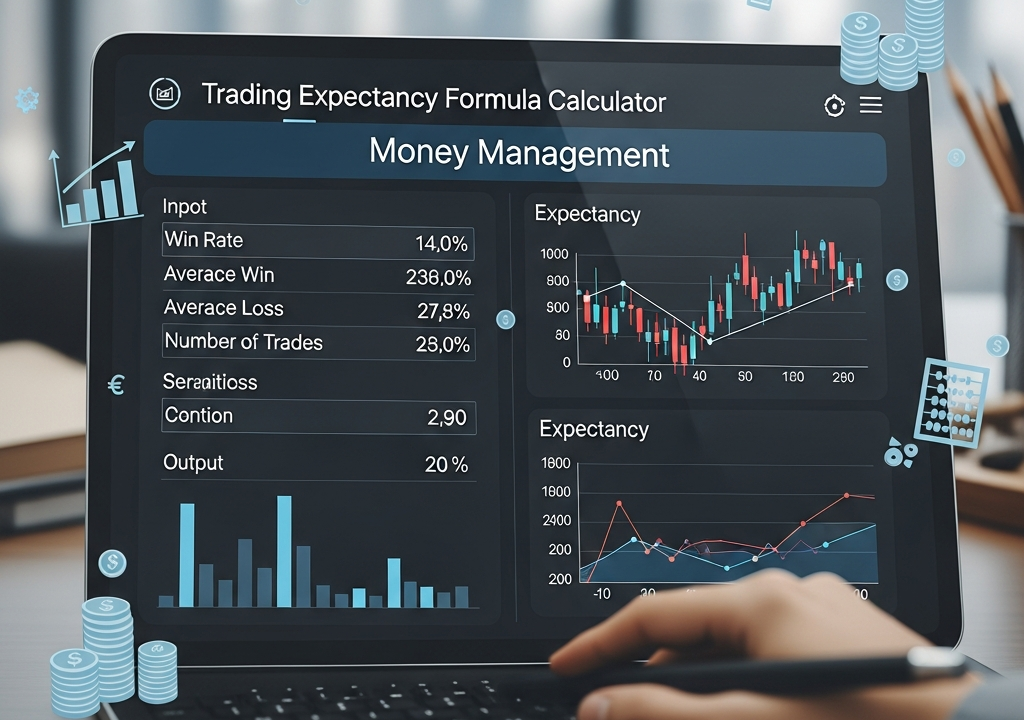
To use a trading expectancy formula calculator effectively, you need to gather a bit of data from your journal. If you haven’t been keeping a journal, let 2026 be the year you start. You’ll need:
- Win Rate: The percentage of your trades that end in a profit.
- Loss Rate: The percentage of trades that end in a loss (simply 100% minus your win rate).
- Average Win Size: The total dollar amount of all winning trades divided by the number of winning trades.
- Average Loss Size: The total dollar amount of all losing trades divided by the number of losing trades.
The Formula That Changes Everything
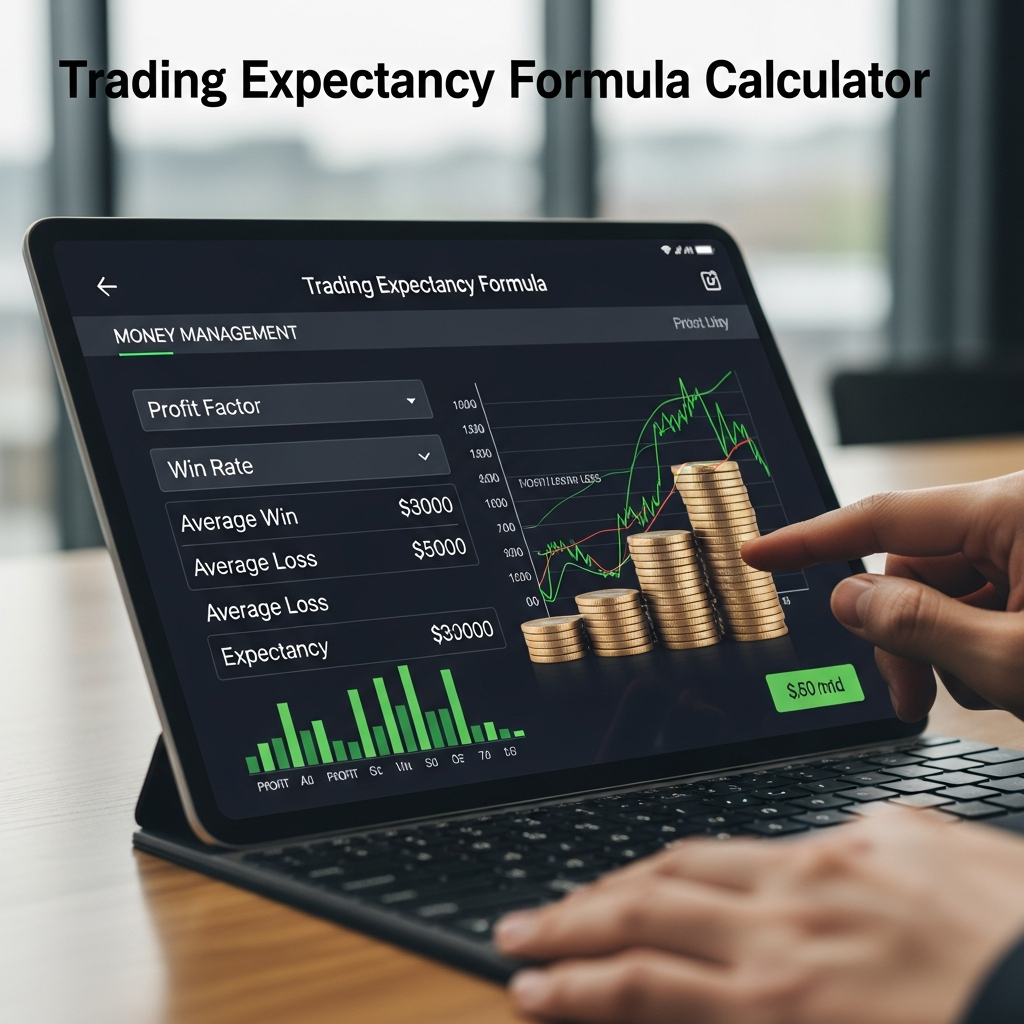
The math behind a trading expectancy formula calculator is actually quite simple, but its implications are profound. Here is the standard formula:
Expectancy = (Win Rate % * Average Win) – (Loss Rate % * Average Loss)
Let’s look at a quick example. Suppose you win 40% of the time. When you win, you make $500. When you lose (60% of the time), you lose $200.
Calculation: (0.40 * 500) – (0.60 * 200) = 200 – 120 = $80.
This means your expectancy is +$80. For every single trade you take, regardless of whether that specific trade is a win or a loss, you are statistically ‘earning’ $80. If you take 100 trades, you can expect to be up $8,000.
Why Manual Math Isn’t Enough
You might think, “I can just do that on a napkin.” And you could, for a static set of data. But markets in 2026 move fast, and your performance isn’t static. Your win rate fluctuates based on market volatility, and your average win size might shrink during choppy periods.
A trading expectancy formula calculator allows you to run ‘what-if’ scenarios. What happens if my win rate drops by 5% but I increase my reward-to-risk ratio? What happens if I stop taking those ‘B-tier’ setups that have a high loss rate? These calculators provide an objective mirror. They strip away the ego and the ‘feeling’ that a strategy is good, replacing it with cold, hard numbers.
Overcoming the ‘High Win Rate’ Obsession
One of the biggest traps new traders fall into is the pursuit of a high win rate. We are programmed by school and society to believe that 90% is an ‘A’ and 50% is a failure. In trading, a 30% win rate can make you a millionaire, while a 70% win rate can leave you bankrupt.
How? If your 70% wins are small ($100) but your 30% losses are massive ($400), your expectancy is: (0.70 * 100) – (0.30 * 400) = 70 – 120 = -$50. You are losing $50 per trade despite ‘winning’ most of the time. Using a calculator helps you visualize this paradox so you can stop chasing the dopamine hit of a ‘win’ and start chasing the sustainability of a ‘positive expectancy.’
Practical Steps to Improve Your Expectancy in 2026
Once you’ve plugged your numbers into a trading expectancy formula calculator and seen the result, what do you do next? If your number is negative or lower than you’d like, you have two primary levers to pull.
1. Increasing the Win Rate (The Hard Way)
Many traders try to fix their expectancy here. They add more filters, more indicators, or try to predict the market better. This is often the hardest path because the market is inherently uncertain. However, you can improve this by narrowing your focus to specific sessions (like the London/New York overlap) or specific high-probability setups.
2. Increasing the Reward-to-Risk Ratio (The Smart Way)
The easiest way to boost your expectancy is often to let your winners run or cut your losses faster. If you can move your average win from $400 to $500 while keeping everything else the same, your expectancy jumps significantly. This requires psychological discipline rather than better ‘prediction’ skills.
The Psychology of Negative Streaks
The most powerful benefit of knowing your expectancy is the peace of mind it brings during a drawdown. In 2026, with algorithmic trading and high volatility, drawdowns are a part of life. When you know your strategy has a positive expectancy of $100 per trade, a five-trade losing streak doesn’t feel like a disaster. It feels like a temporary cost of doing business.
Without a trading expectancy formula calculator, a trader who loses five times in a row will likely abandon their strategy, start ‘revenge trading,’ or increase their position size to ‘make it back.’ A trader who knows their math stays the course. They know the next 20 trades will likely bring them back to the statistical mean.
The Role of Sample Size
A quick word of caution: expectancy math only works with a valid sample size. If you’ve only taken five trades, your trading expectancy formula calculator result is essentially noise. Aim for at least 30 to 50 trades before you start making major strategy adjustments based on the numbers. The law of large numbers needs room to breathe.
Integrating Tech: Trading in 2026
We are living in an era where data is everywhere. Many modern trading platforms now have a built-in trading expectancy formula calculator that updates in real-time as you close trades. If yours doesn’t, there are plenty of web-based tools and spreadsheets that can do the heavy lifting. The key is to make checking these stats a weekly habit.
I usually spend my Saturday mornings looking at my expectancy for the week versus my expectancy for the year. If my weekly expectancy is dipping significantly, it’s usually a sign that I’m either over-trading or the current market regime has shifted and I need to adjust my volatility expectations.
Final Thoughts for the Modern Trader
Trading is often sold as a path to quick riches, but the professionals know it’s actually a path to disciplined risk management. Your trading expectancy formula calculator is the compass that keeps you from getting lost in the fog of market noise. It tells you when to keep going, when to stop, and when to pivot.
If you haven’t calculated your expectancy recently, stop what you are doing. Grab your last 30 trades, find a calculator, and face the truth of your numbers. It might be uncomfortable at first, especially if the math shows you’re in the negative, but it is the only way to move from being a gambler to being a professional market participant. Remember, the goal isn’t to be right; the goal is to be profitable. And profitability is always a matter of expectancy.