The Night I Learned My Lesson the Hard Way
I still remember that Tuesday night back in my early trading days. I had a solid position in a volatile tech stock, and I was feeling confident. I checked my charts one last time, felt secure in the trend, and went to make a cup of coffee. By the time I walked back to my desk—less than ten minutes later—a surprise news flash had sent the price spiraling through my mental exit point and deep into the red. I froze. Instead of cutting the loss, I watched, paralyzed, as my account balance evaporated. That was the moment I realized that being a ‘good trader’ isn’t just about picking winners; it’s about surviving the losers. That’s when I started obsessing over automated stop loss management tools.
In 2026, the markets move faster than ever. High-frequency algorithms and global news cycles can swing a price by 5% before you’ve even finished reading a headline. If you’re still relying on manual execution or simple ‘set-and-forget’ static stops, you’re essentially fighting a forest fire with a garden hose. You need a system that doesn’t blink, doesn’t get tired, and definitely doesn’t get emotional when things get ugly.
Why Manual Stops Often Fail Us
Let’s be honest with ourselves: humans are terrible at taking losses. We have this built-in psychological bias called ‘loss aversion.’ We feel the pain of a loss twice as intensely as we feel the joy of a gain. When we see a trade go against us, our brain screams at us to wait just a little longer, hoping for a bounce that might never come. This is where manual risk management falls apart.
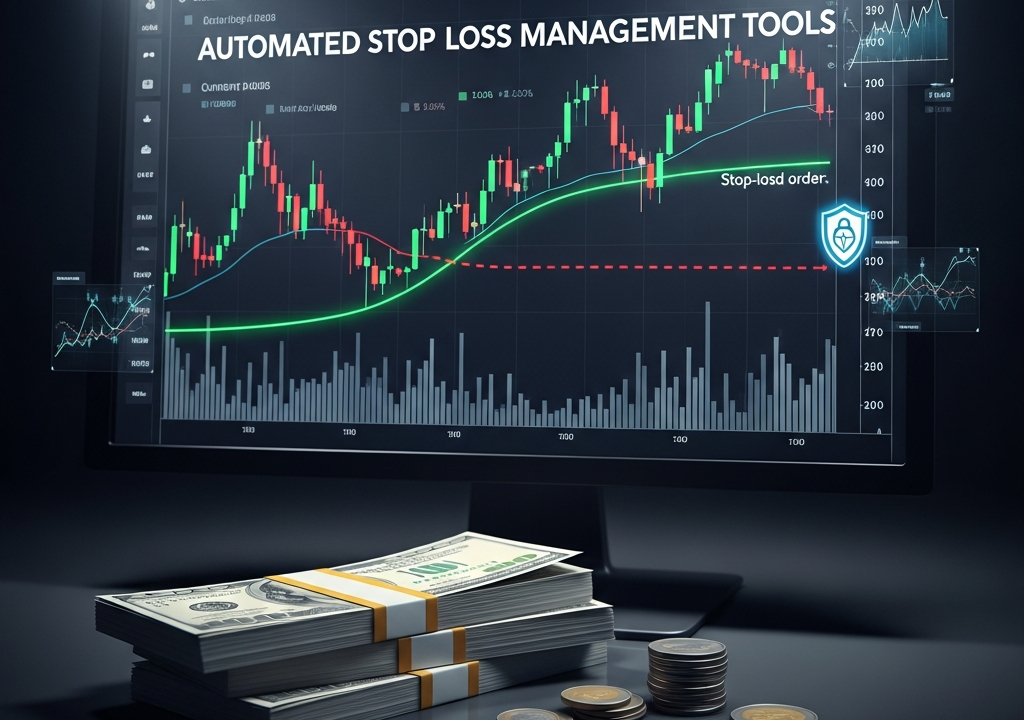
Manual stops require you to be present, focused, and disciplined at all times. But life happens. Your internet drops, your kid needs help with homework, or you simply get distracted by another chart. Automated stop loss management tools act as your digital bodyguard. They don’t care about your hopes or your fears. They only care about the price levels you’ve programmed them to respect. By removing the ‘human element’ from the exit strategy, you’re giving your portfolio a fighting chance to live another day.
Exploring the World of Automated Stop Loss Management Tools
When we talk about automation today, we aren’t just talking about a simple price trigger. The technology has evolved into sophisticated ecosystems that can manage risk across multiple asset classes simultaneously. These tools come in various shapes and sizes, depending on whether you’re a retail forex trader, a crypto enthusiast, or a professional equity swing trader.
The Dynamic Power of Trailing Stops
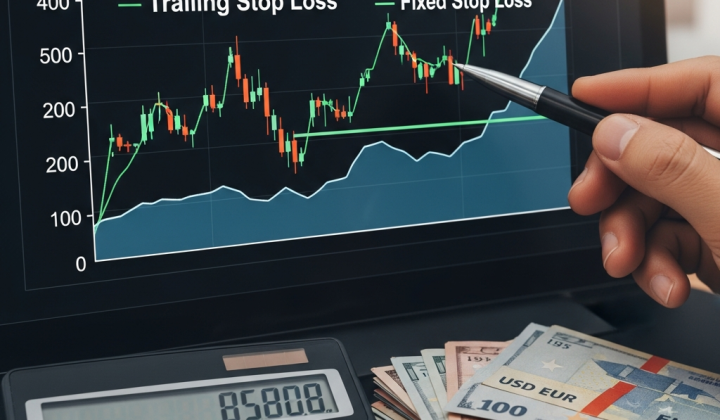
One of the most popular features within automated stop loss management tools is the advanced trailing stop. Unlike a fixed stop loss that sits at one price until hit, a trailing stop moves upward (for long positions) as the price increases. In 2026, we’ve moved beyond simple percentage-based trails. We now use volatility-adjusted trailing stops that look at the Average True Range (ATR) to decide how much ‘breathing room’ a trade needs. This allows you to lock in profits during a run while still giving the asset enough space to fluctuate without getting stopped out prematurely.
Multi-Stage and Scaled Exits
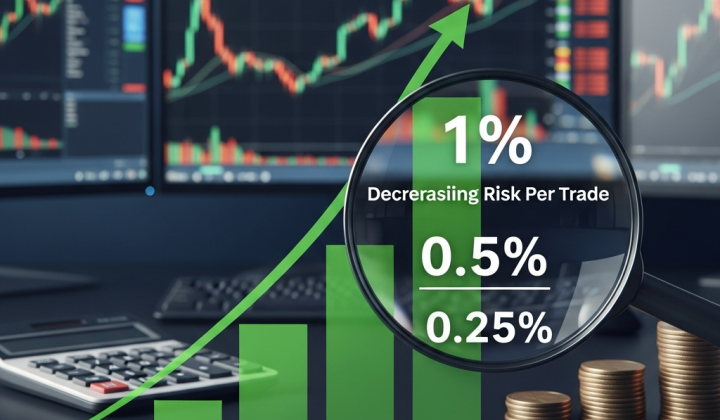
Why exit an entire position at once? Modern tools allow for tiered risk management. You can program your system to close 25% of your position at a certain profit target, move the stop loss for the remaining 75% to breakeven, and then trail the rest. This kind of ‘laddering’ is nearly impossible to execute manually across twenty different trades, but for a dedicated tool, it’s just another line of code. It turns your trading from a stressful gamble into a calculated business process.

How to Choose the Right Tool for Your Strategy
Not every tool is built the same. If you are using MetaTrader 5 (MT5), you might be looking for a specialized Expert Advisor (EA) that handles trade management. If you’re in the crypto space, you’re likely looking for a cloud-based bot that connects via API to your exchange. Here are a few things you should look for when vetting these systems.
- Execution Latency: In a flash crash, milliseconds matter. Your tool needs to be hosted on a VPS (Virtual Private Server) or have high-speed API connectivity to ensure your orders hit the exchange the moment the trigger is tripped.
- Slippage Protection: Some automated stop loss management tools include logic to handle ‘gaps’ in the market. If the price jumps over your stop loss, the tool needs to know how to execute a market order immediately to prevent further slippage.
- Customization: Can it handle ‘Hard Stops’ vs ‘Soft Stops’? A soft stop might alert you when a price is touched, while a hard stop executes the trade. Having both options gives you flexibility in different market conditions.
- Reliability: Does the tool have a fail-safe? If the tool’s server goes down, does your stop loss still exist on the exchange’s side? This is a critical distinction between ‘local’ automation and ‘server-side’ automation.
Setting Up Your First Automated Workflow
Getting started doesn’t have to be intimidating. Most traders start small. You might begin by using a simple ‘Breakeven Bot.’ This is a basic piece of software that automatically moves your stop loss to your entry price once you’ve hit a specific profit target. It’s a massive psychological relief. Suddenly, you have a ‘risk-free’ trade, and you can let it run without that nagging anxiety in the back of your mind.
From there, you can graduate to more complex logic. For instance, you could set up a tool that monitors the 1-hour moving average. If the price closes below that average on a specific timeframe, the tool automatically tightens your stop loss to the previous candle’s low. This is the kind of active management that professional hedge funds use, and in 2026, it’s available to anyone with an internet connection and a bit of curiosity.
Moving Past the Fear of Missing Out (FOMO)
One of the biggest obstacles to using automated stop loss management tools is the fear that a tool will ‘stop you out right before it goes back up.’ We’ve all been there. You get stopped out for a loss, and ten minutes later, the price rockets to the moon. It feels personal. It feels like the market is out to get you.
But here is the hard truth: that one ‘missed’ trade is the price of admission for protecting yourself against the ‘account killer.’ A stop loss isn’t there to make sure you catch every win; it’s there to make sure no single trade can ever blow up your account. When you automate this, you stop viewing those exits as failures. They just become part of the statistical reality of trading. You become a manager of risk rather than a victim of the charts.
Common Pitfalls to Avoid
Even the best automated stop loss management tools can’t save a bad strategy. One common mistake is setting stops too tight. If you don’t account for ‘market noise’ or the natural spread of an asset, your automated tool will constantly stop you out, nibbling away at your capital through a thousand tiny cuts. This is why many traders now use volatility-based indicators to set their stop distances automatically.
Another pitfall is ‘set-and-forget’ syndrome. Just because your risk management is automated doesn’t mean you should stop auditing your trades. Every week, you should look back and see how many of your stops were hit. Were they ‘good’ stops that protected you from a crash, or were they ‘bad’ stops that triggered because your settings were too sensitive? Automation is a tool, not a total replacement for your brain.
The Road Ahead for Retail Traders
As we move further into 2026, the gap between retail and institutional trading tools is shrinking. We are seeing AI-driven tools that can analyze historical price action in real-time and suggest the optimal stop loss placement based on current market sentiment. Imagine a tool that notices the market is becoming ‘choppy’ and automatically widens your stops to prevent being hunted by algorithms, then tightens them back up when a clear trend emerges.
This level of sophistication was once reserved for the giants on Wall Street. Now, it’s something you can run from your laptop while sitting in a coffee shop. The question isn’t whether you should use these tools—it’s whether you can afford not to. The markets are an environment of absolute uncertainty. Your only control is how much you are willing to lose on any given play.
Final Thoughts on Mastering Your Trade
Trading is often described as 10% strategy and 90% psychology. By implementing automated stop loss management tools, you are essentially outsourcing that 90% to a machine. This frees up your mental energy to focus on what actually matters: finding high-probability setups and refining your overall methodology.
Don’t wait for a massive drawdown to be your wake-up call. Start small, find a tool that fits your platform, and begin automating your exits. Your future self—the one who isn’t staring at a screen at 3:00 AM with a racing heart—will thank you for it. The goal is to stay in the game long enough for your edge to play out. Protect your capital, respect the process, and let the automation do the heavy lifting for you.