The Sleep-Trading Dream and the Reality Check
Have you ever sat there, bleary-eyed at 3:00 AM, watching a candlestick chart wiggle back and forth, wondering why on earth you’re doing this to yourself? We’ve all been there. The promise of binary options is simple: you’re right or you’re wrong. It’s fast, it’s high-stakes, and it’s exhausting if you do it manually. Naturally, the next thought is: “Can’t a machine just do this for me?”
That’s where the world of bots, scripts, and algorithms comes in. But before you go plugging your life savings into a shiny new “Auto-Profit-3000” script you found on a forum, there is a massive hurdle you need to clear. I’m talking about the binary options automated trading legal status. This isn’t just boring fine print; it’s the difference between a legitimate financial strategy and a one-way ticket to a frozen bank account or a scam-induced headache.
In 2026, the landscape has shifted significantly. Regulators have gotten smarter, AI has become the standard, and the “wild west” days of offshore brokers doing whatever they want are slowly fading into the rearview mirror. Let’s break down what you actually need to know about the legality of letting a bot pull the trigger on your trades.
Wait, Is the Bot Itself Illegal?
Let’s clear up one big misconception right out of the gate. Software, by itself, is rarely illegal. If you write a piece of code that says “if price goes up, click buy,” you haven’t committed a crime. In most jurisdictions, the binary options automated trading legal status doesn’t focus on the code; it focuses on who is using it and where the broker is located.
Think of it like a car. A car can go 150 mph. Owning the car isn’t illegal. Driving it 150 mph on a residential street? That’s where you run into trouble. Similarly, using an automated tool is generally perfectly legal *if* the underlying activity (binary options trading) is legal in your country and *if* the broker you are using is authorized to accept your business.
The Broker Is the Gatekeeper
The real legal weight falls on the brokers. Regulators like the SEC and CFTC in the United States, or ESMA in Europe, don’t usually go knock on the doors of individual retail traders for using a bot. Instead, they go after the platforms. If a platform offers automated binary options to citizens in a restricted country without a license, that platform is breaking the law. As a trader, your risk is less about jail time and more about your money vanishing when the regulator shuts that platform down.
The Global Map of Legality in 2026
The world is currently a patchwork quilt of regulations. What works in a beach house in Bali won’t fly in a high-rise in Chicago. Here is how the binary options automated trading legal status looks across the globe right now.
The United States: The Land of the Strict
If you’re in the US, things are very specific. Binary options are legal, but they must be traded on a regulated exchange like NADEX or the Cantor Exchange. These exchanges are overseen by the CFTC. Now, here is the kicker: many automated bots you find online are designed to work with offshore, unregulated brokers. Using those in the US is a massive legal gray area that usually ends poorly for the trader.
If you want to automate in the US, you have to use the APIs provided by these regulated exchanges. If the bot doesn’t support a CFTC-regulated exchange, you’re effectively stepping outside the legal protection of the US government. Most of those “magic” bots you see on social media? They won’t touch a regulated exchange because those exchanges have actual rules against market manipulation.
Europe and the UK: The Retail Ban Era
A few years back, ESMA (the European Securities and Markets Authority) dropped a hammer on the industry, banning the marketing and sale of binary options to retail investors. While some professional-status traders can still access them, for the average person, binary options are largely off the table in the EU and UK.
Because the product itself is restricted, the binary options automated trading legal status for retail traders is essentially “non-existent.” You can’t legally automate something you aren’t supposed to be trading in the first place. Many traders try to bypass this using VPNs and offshore brokers, but let me tell you from experience: when it comes time to withdraw your profits, those offshore brokers often use the “you’re trading from a restricted region” excuse to keep your money.
Australia and the ASIC Shift
Australia used to be the go-to spot for high-leverage and binary trading, but ASIC (Australian Securities and Investments Commission) followed Europe’s lead. By 2026, the rules have tightened. Automated trading is legal for sophisticated investors, but for the average person on the street, the options are limited. The focus here is on consumer protection—preventing people from being wiped out by high-frequency bots they don’t understand.

Why Regulators Are Scared of Your Bot
You might wonder why the binary options automated trading legal status is so complicated. Why do governments care if you use a script? It boils down to three things: market integrity, consumer protection, and systemic risk.
- Predatory Algorithms: Many “automated bots” sold to beginners are actually designed to lose money. They are often built by the brokers themselves or affiliates who get a kickback when you blow your account. Regulators hate this.
- Server Stability: Thousands of bots hitting a broker’s API every millisecond can crash systems. Regulated exchanges have strict rules about how many “calls” a bot can make per second.
- Money Laundering: Automated trading can be used to move large sums of money across borders quickly. Regulators want to know exactly who is behind every trade, and bots can sometimes obscure that.
The Rise of AI and Decentralized Options (DeFi)
As we move through 2026, a new player has entered the game: Decentralized Finance (DeFi). Some traders are moving toward decentralized binary options protocols. Here, the “broker” is just a smart contract on a blockchain like Ethereum or Solana.
Does this change the binary options automated trading legal status? Technically, no, but practically, yes. Regulating a smart contract is like trying to catch smoke with a butterfly net. If you use an AI-driven bot to trade on a decentralized exchange (DEX), you are operating in a space where traditional laws are still struggling to catch up. It’s the ultimate “trade at your own risk” zone. While you might avoid the prying eyes of a local regulator, you also have zero recourse if the smart contract has a bug and drains your wallet.
How to Stay on the Right Side of the Law
Look, I get it. The allure of passive income is strong. But if you want to take this seriously, you have to be smart about it. Here is a checklist to ensure you aren’t accidentally breaking laws or setting yourself up for a scam.
1. Verify the Broker’s License
Don’t take their word for it. If a broker says they are regulated by CySEC, ASIC, or the CFTC, go to the regulator’s actual website and search for the broker’s name. If they aren’t there, walk away. Your bot is only as legal as the platform it runs on.
2. Understand “Expert Advisors” (EAs)
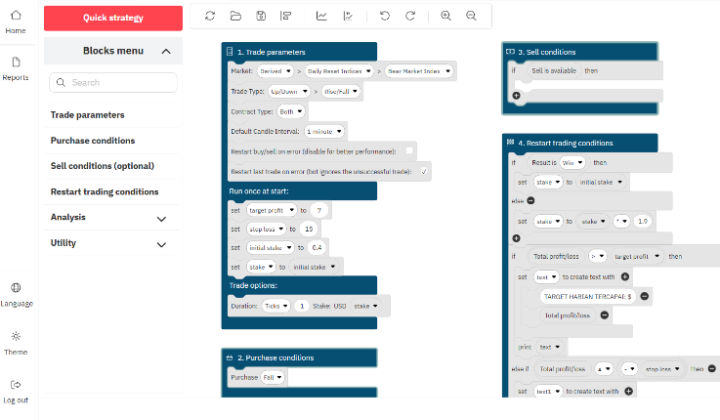
In platforms like MetaTrader 4 or 5, bots are called Expert Advisors. Using an EA is a standard industry practice. Most legitimate brokers allow them. The legal trouble usually starts when you use a *third-party* platform that connects to your broker via a “web scraper” or unauthorized bridge. Stick to official APIs.
3. Taxes Don’t Care About Bots
Even if your binary options automated trading legal status is perfectly fine, the taxman still wants his cut. Whether a human or a bot made the trade, capital gains taxes apply. In 2026, many tax authorities have automated systems that flag large transfers from trading platforms. Keep a log of your bot’s trades; you’ll need it come April.
4. Beware of “Guaranteed” Returns
If a bot provider tells you their software is “100% legal and guaranteed to make 10% a day,” they are lying about at least one of those things. No bot can guarantee returns because the market is inherently chaotic. Legally, selling software under false pretenses is fraud, and many of these bot sellers operate from countries where they can’t be touched by your local police.
The Reality of Using Bots in 2026
Let’s have a heart-to-heart. Most people looking for the binary options automated trading legal status are actually looking for a shortcut. They want a way to bypass the learning curve of trading. The truth is, the most successful “automated” traders aren’t just clicking ‘Start’ on a bot and going to the beach. They are constantly tweaking their parameters, monitoring news events, and ensuring their code is keeping up with market volatility.
In the current year, AI has made bots more accessible, but it has also made the markets more efficient. This means that the “easy money” gaps that bots used to exploit are closing faster than ever. To stay legal and profitable, you have to treat automation as a tool for efficiency, not a replacement for strategy.
Is Automation Right for You?
Before you dive in, ask yourself: do you understand the logic the bot is using? If you don’t know why the bot is entering a trade, you shouldn’t be using it. Legality aside, the financial risk of “black box” trading (where you don’t know what’s happening under the hood) is higher than any regulatory risk.
A Path Forward
The binary options automated trading legal status will likely continue to evolve. We might see more countries move toward the “professional only” model, or we might see a resurgence of regulated retail options as blockchain technology makes transparency easier.
If you’re just starting out, my advice is to keep it simple. Start by learning to trade manually on a regulated exchange. Understand the mechanics of the market. Then, and only then, look into automating your successful manual strategies. Use the official APIs provided by regulated entities. It’s the longer road, sure, but it’s the only one that doesn’t end with a “Notice of Seizure” or a cleared-out bank account.
Trading is a marathon, not a sprint. Using a bot is like wearing high-tech running shoes. They can help you perform better, but you still have to be the one doing the running. Stay informed, stay skeptical of “too good to be true” offers, and always keep an eye on the shifting sands of global regulation. The world of 2026 offers more tools than ever before—just make sure you’re using them in a way that lets you sleep at night without worrying about the legalities of your last trade.