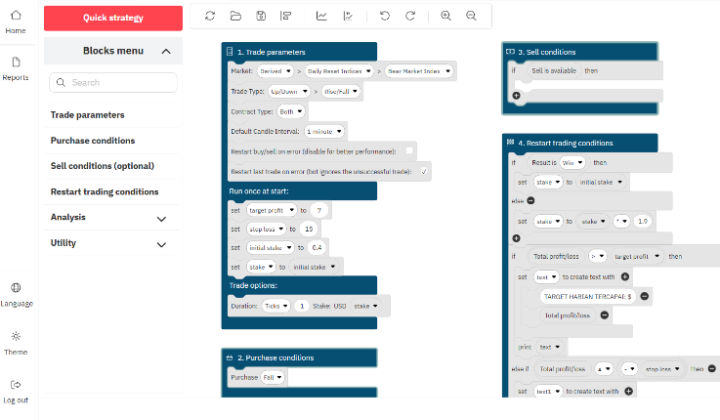

The Shift From Manual To Algorithmic Mimicry
I remember sitting in a dark room back in 2021, staring at a 1-minute candle chart of EUR/USD until my eyes felt like they were full of sand. I was trying to master the art of the perfect ‘call’ or ‘put’ entry. It was exhausting, emotionally draining, and, frankly, not very profitable for someone with a full-time job. Fast forward to 2026, and the landscape has shifted entirely. We aren’t just copying human traders anymore; we are diving deep into the world of copy trading for binary options bots.
The logic is simple: if a piece of code can analyze market data faster than a human can blink, why wouldn’t I just piggyback on its success? This isn’t about some ‘get rich quick’ magic button. It is about leveraging the incredible processing power of modern algorithms and the social connectivity of modern trading platforms. If you have ever felt like you are one step behind the market, this transition might be exactly what you need to change your perspective.
What Exactly is Copy Trading for Binary Options Bots?
To understand this, we have to look at two different worlds colliding. On one side, you have binary options bots—scripts or programs designed to execute trades automatically based on technical indicators like RSI, Bollinger Bands, or proprietary AI signals. On the other side, you have copy trading, which is the social practice of mirroring another person’s trades in your own account.
When we combine them, we get copy trading for binary options bots. Instead of following a human who might get tired, angry, or distracted by their morning coffee, you are following an automated system that runs 24/7. When the ‘Master Bot’ places a trade on its developer’s account, that same trade is instantly replicated in your account via an API or a platform’s internal social module. You get the benefit of the automation without needing to know how to write a single line of Python or MQL5 code.

Why This Trend Is Exploding in 2026
Why now? Why is everyone talking about this? Well, the tech has finally caught up with the ambition. A few years ago, the latency (the delay between the bot trading and your account copying) was so bad that you’d often enter a binary trade at a slightly different price, turning a winner into a loser. Today, high-speed execution bridges have virtually eliminated that gap.
Another reason is the ‘fatigue factor.’ Let’s be honest: humans are terrible at following rules. A bot doesn’t decide to ‘revenge trade’ after a loss. It doesn’t get greedy and double its stake when it’s on a winning streak—unless it’s programmed to. By using copy trading for binary options bots, you are essentially outsourcing your discipline to a machine that doesn’t have feelings.
Choosing the Right Bot to Follow
Here is where most people mess up. They look at a leaderboard, see a bot with a 95% win rate over the last two days, and dump their life savings into it. That is a recipe for disaster. When you are looking for a bot to copy, you need to think like a scout, not a gambler.
- Track Record Consistency: I look for bots that have been active for at least three to six months. Anyone can get lucky for a week, but surviving multiple market cycles is a different story.
- Maximum Drawdown: This is the most important number you probably aren’t looking at. How much did the bot lose at its worst point? If a bot has a 90% win rate but its drawdown is 80%, one bad day will wipe you out.
- Trade Frequency: Some bots take 50 trades a day; others take five. If you are copying a high-frequency bot, you need to ensure your broker can handle that volume without flagging your account.
- Strategy Transparency: I tend to trust developers who explain the logic. Is it a trend-follower? A mean-reversion bot? Avoid ‘black box’ bots that promise profits without explaining the ‘how.’
Setting Up Your Connection
The technical side of copy trading for binary options bots has become surprisingly user-friendly. Most major platforms now offer an ‘Auto-Trade’ or ‘Social’ tab. You usually follow these steps:
- Select a verified bot provider from the platform’s marketplace.
- Allocate a specific portion of your balance (never the whole thing!).
- Set your risk parameters—this is your safety net. You can often set a ‘stop-copy’ limit if your balance drops by a certain percentage.
- Hit ‘Start’ and let the API do the heavy lifting.
I usually recommend starting with a demo account. Even though you are copying a bot, you need to see how its style fits with your risk tolerance. If the bot takes five losing trades in a row and you find yourself sweating, that bot is too aggressive for your personality, even if it eventually ends the day in profit.

The Risks No One Wants to Talk About
Let’s get real for a second. There is no such thing as a risk-free trade, especially in the binary options world. When you engage in copy trading for binary options bots, you are taking on a specific set of risks that manual traders don’t always face.
The biggest one is ‘Market Shift.’ A bot is built for specific conditions. A bot that prints money in a ranging market will likely get shredded when a major news event causes a massive trend. Since you aren’t the one managing the bot, you are relying on the developer to turn it off or adjust the settings during high-volatility events like a central bank interest rate announcement.
Then there is the ‘Broker Conflict.’ Not all brokers love bots. Some might introduce artificial slippage or delay your execution if they see you are part of a massive ‘copy-army’ that is all hitting the same trade at the same microsecond. It’s vital to use reputable, regulated platforms that explicitly allow automated copy trading.
Managing Your Expectations
Look, I’ve seen people turn $100 into $1,000 in a week using these bots, and I’ve seen those same people lose it all by the following Monday. The difference between the winners and the losers isn’t the bot they chose; it’s how they managed the bot. Treat copy trading for binary options bots like an investment portfolio. You wouldn’t put all your money in one tech stock; don’t put all your money in one bot.
I like to diversify. I’ll copy one bot that focuses on low-volatility Asian sessions and another that thrives on the chaos of the New York open. This way, if one bot has a bad day because the market isn’t behaving as expected, the other might pick up the slack. It’s about smoothing out that equity curve.
The Psychology of ‘Doing Nothing’
Strangely enough, the hardest part of this whole process is doing nothing. When you copy a bot, you will feel the urge to intervene. You will see the bot take a trade that looks ‘wrong’ to your human eyes, and you’ll want to close it early. Resist that urge. The moment you start manually messing with an automated strategy, you destroy the mathematical edge the bot was designed to provide.
You have to trust the data. If you’ve done your homework and picked a bot with a proven history, let it do its job. Your job is to monitor the performance at the end of the week, not the end of every minute. If the bot stops performing according to its historical averages, then you fire it and move on. It’s business, not a relationship.
Future-Proofing Your Strategy in 2026
As we move further into 2026, we are seeing more ‘AI-Adaptive’ bots. These aren’t just static sets of rules; they are machine learning models that adjust their own parameters based on real-time market feedback. Copy trading for binary options bots that utilize these neural networks is the new frontier. They are better at handling the ‘Market Shift’ problem I mentioned earlier because they can recognize when a trend is forming and sit on the sidelines.
Staying updated means being part of the communities where these bots are developed. Join the Discords, read the Telegram logs, and see what the developers are saying. The more you understand the ‘soul’ of the machine you are copying, the more confident you will be when the inevitable red days happen.
Practical Tips for Newcomers
If you are just starting out today, here is my ‘survival guide’ for the first 30 days:
- Start Small: Use the minimum copy amount allowed. You need to see the execution in a live environment.
- Check the Payouts: Make sure the bot is trading assets with at least an 80% payout. A high win rate means nothing if the payout is only 60%.
- Withdraw Regularly: When you make a profit, take some out. Don’t just let it compound forever. Realized profit is the only profit that matters.
- Watch for ‘Martingale’ Bots: These bots double their trade size after every loss. They look great on a chart until they hit a losing streak long enough to empty your account. Be very careful with these.
A Final Reality Check
The dream of passive income is what draws us all to copy trading for binary options bots. And yes, it is possible. I have seen it work beautifully. But it is not a ‘set it and forget it’ forever solution. It requires active management of your ’employees’ (the bots). You are the CEO of your trading account. You don’t need to do the manual labor of trading, but you do need to make sure the ones doing the work are still qualified for the job.
The technology we have in 2026 is incredible, giving us access to tools that were once reserved for hedge funds. By staying skeptical, staying diversified, and staying disciplined, you can navigate the world of binary options with a significant advantage. Just remember that the goal isn’t to find the perfect bot—it’s to build a system that works while you sleep, without giving you nightmares when you wake up.