The Night My Trading Account Almost Blew Up
I still remember a Tuesday night back in the early 2020s. I had a perfect setup on the GBP/JPY. Every technical indicator screamed ‘buy.’ I set a standard 30-pip stop loss because that’s what the gurus told me to do. I went to bed feeling like a genius. I woke up to a notification that I’d been stopped out at the exact low of the move before the price skyrocketed 200 pips in my direction. That’s when it hit me: the market doesn’t care about my fixed numbers. It breathes. It expands. It contracts.
Fast forward to today. If you are still using ‘set and forget’ fixed stop losses, you are basically handing your money to the institutional algorithms on a silver platter. In the current landscape, dynamic stop loss placement 2026 has moved from being an advanced ‘extra’ to a mandatory survival skill for anyone serious about staying in the game.

Why Static Stops Are Trading Suicide Right Now
Think about the way you drive a car. You don’t glue your foot to a specific spot on the brake pedal regardless of whether you’re on a highway or a school zone. You adapt. Yet, most traders treat their risk management like a broken cruise control. They use 20 pips for every pair, every timeframe, and every market condition.
The markets of 2026 are defined by extreme liquidity shifts and flash-volatility events triggered by high-frequency trading AI. A 20-pip stop that worked at 10:00 AM on a quiet Monday is utterly useless during a Wednesday New York session open. Static stops fail because they don’t account for the ‘market noise.’ When the noise increases, your stop needs to move further away to give the trade room to breathe. When the market goes quiet, your stop should tighten to protect your gains.
The Mathematics of Market Breathing
Every financial instrument has a heartbeat, often measured by volatility. If the average daily move of a stock is 5%, putting a 1% stop loss is asking for trouble. You are essentially putting a leash on a tiger and expecting it to stay within a two-foot radius. It’s going to snap. This is where the concept of dynamic stop loss placement 2026 steps in to provide a scientific, rather than emotional, way to exit a losing trade.
Mastering the ATR: The Gold Standard for 2026
The Average True Range (ATR) remains one of the most powerful tools in a trader’s arsenal, but the way we use it has evolved. Instead of just looking at a single number, we now look at the ATR as a protective buffer. If the ATR on a 1-hour chart is 15 pips, your stop loss should likely be at least 1.5x or 2x that value away from your entry. This ensures that you aren’t kicked out by normal market ‘jitter.’
- The Multiplier Effect: In higher volatility regimes, I often bump my multiplier to 2.5x ATR. It feels counter-intuitive to have a wider stop, but it actually increases the win rate because you aren’t being shaken out by minor pullbacks.
- Timeframe Alignment: If you’re day trading, look at the 15-minute ATR for entry, but keep an eye on the 4-hour ATR to understand the ‘macro’ noise level.
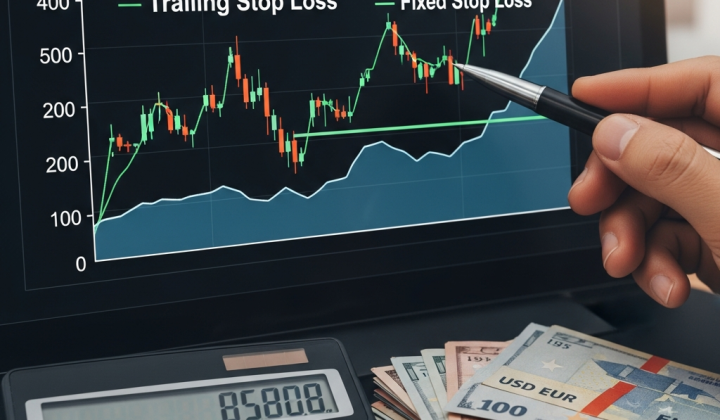
- Trailing with Purpose: As the trade moves in your favor, you don’t just move the stop to break even. You move it based on the current ATR. If volatility drops, your trailing stop tightens automatically.
Moving Average Envelopes and Keltner Channels
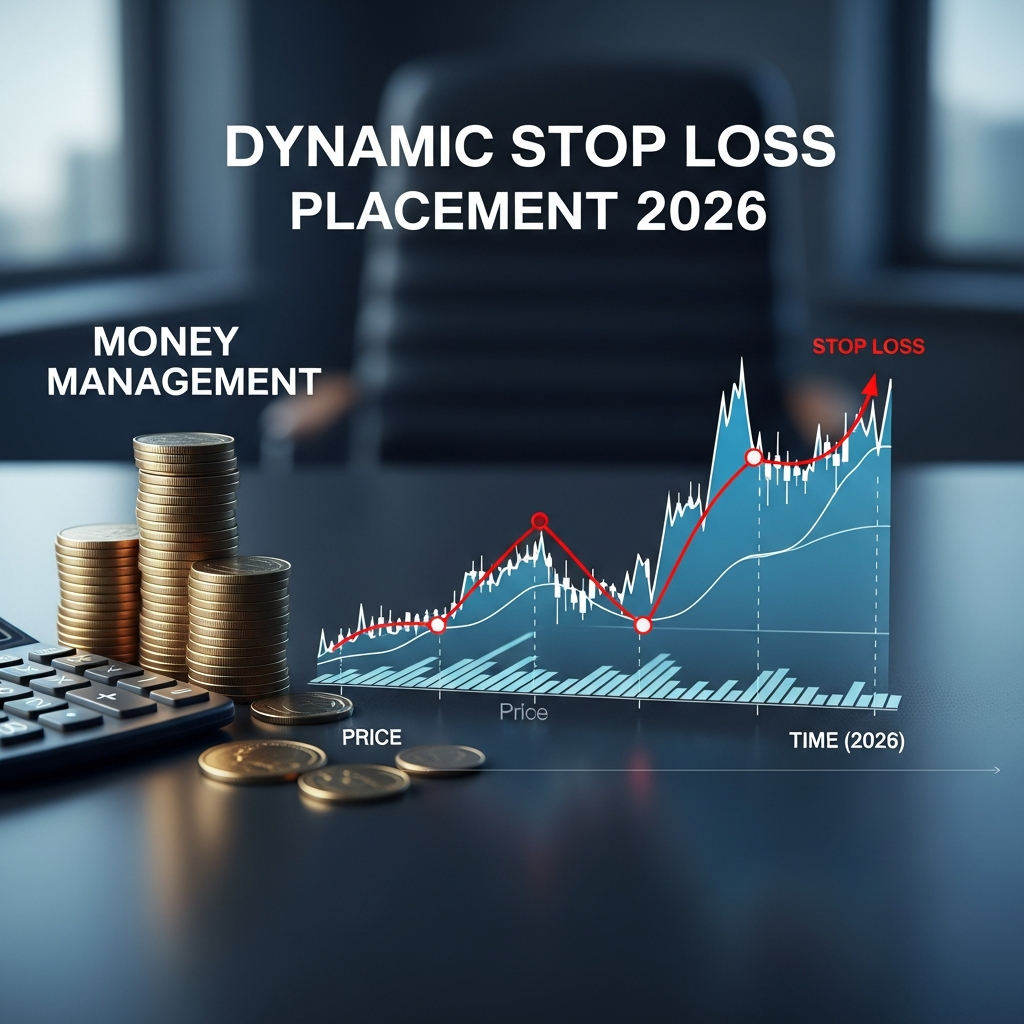
Another way to visualize dynamic stop loss placement 2026 is through the use of channels. I’ve shifted away from Bollinger Bands for stops because they are too reactive to extreme spikes. Instead, Keltner Channels—which use ATR for their width—provide a much smoother ‘safety zone.’
I like to think of Keltner Channels as the guardrails on a mountain road. As long as the price stays within the channel, the trend is healthy. The moment the price closes outside the opposite side of the channel, the ‘story’ of that trade has changed. It’s time to get out. This removes the ‘hope’ factor. You aren’t hoping the price comes back; you are acknowledging that the market structure has shifted.
The Psychology of the ‘Floating Exit’
Let’s be honest: moving your stop loss usually feels like cheating. We’ve been told ‘never move your stop.’ But that advice refers to moving it *further away* out of fear. Moving it closer or adjusting it based on technical data is actually a sign of discipline. When you use dynamic placement, you’re telling your brain: ‘I trust the data more than my anxiety.’ This shift in mindset is what separates the people who blow accounts from those who trade for a living.
Order Flow and Liquidity Pools: The Pro’s Secret
In 2026, the retail crowd is more educated than ever, which means the ‘big money’ has to be more clever about where they hunt for liquidity. They know exactly where the ‘dumb’ stop losses are—usually just below a recent swing low or at a round number like 1.1000.
To use dynamic stop loss placement 2026 effectively, you have to look for where the liquidity is ‘hiding.’ I often place my stops just *beyond* these obvious zones. If everyone is putting their stop at 1.0980, I’m putting mine at 1.0965, adjusted for the current ATR. Why? Because the market often ‘sweeps’ those obvious levels to fuel the real move in the opposite direction. You want to be the one who survives the sweep.
Technical Implementation: Automation is Your Friend
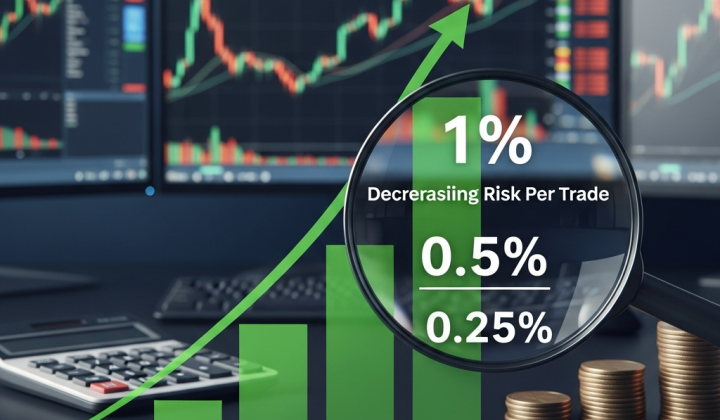
Gone are the days of manually calculating ATR and typing in new stop orders every ten minutes. Most modern platforms allow for custom scripts. I personally use an EA (Expert Advisor) that calculates my risk based on 1% of my account balance and sets a dynamic stop based on a 2.2x ATR multiplier the second I hit ‘buy.’ This takes the emotion out of the entry and ensures my risk is always proportional to the market’s current temper.
The 2026 Strategy: Step-by-Step Execution
If you want to start implementing this today, here is a simple workflow I use for almost every swing trade:
- Identify the Trend: Use a higher timeframe (like the Daily) to see which way the wind is blowing.
- Wait for the Pullback: Never chase a green candle. Wait for the price to breathe back into a value area (like a moving average).
- Calculate the ATR: Look at the 14-period ATR on your entry timeframe.
- Set the Initial Stop: Place your stop at entry price minus (2.5 x ATR) for a long trade.
- The Break-Even Trigger: Do not move to break even until the price has moved at least 2x the distance of your initial risk.
- The Trailing Phase: Once in profit, update your stop every time a new candle closes, maintaining that 2.5x ATR distance from the highest point reached.
Adapting to High-Impact News Events
One mistake many traders make is keeping their dynamic stops active during major news like an FOMC meeting or NFP Friday. In 2026, the slippage during these events can be brutal. A dynamic stop loss is designed for ‘normal’ market conditions. When the environment becomes ‘abnormal,’ the rules change. I usually tighten my stop significantly right before the news or, better yet, I close the position and wait for the dust to settle. No algorithm can perfectly protect you from a black swan event.
Common Pitfalls to Avoid
While dynamic stop loss placement 2026 is powerful, it’s not a magic wand. I see many traders make these two mistakes:
First, they use a multiplier that is too small. A 1x ATR stop is almost guaranteed to get hit during a standard retracement. You need to give the trade room to be ‘wrong’ temporarily. Second, they forget to account for spreads. If you are trading a pair with a wide spread, your dynamic stop needs to be even wider to prevent the broker’s ‘cut’ from knocking you out prematurely.
The Road Ahead for Risk Management
Looking at where we are heading, the integration of real-time sentiment analysis into stop-loss placement is the next frontier. Imagine a stop loss that tightens because a sudden surge of bearish social media sentiment and order flow is detected, even before the price starts to fall. That’s the level of sophistication we’re approaching.
But for now, mastering the relationship between price action and volatility is the best way to secure your trading future. It’s about respect. Respecting the market’s volatility means you’re not trying to force your will upon it. You’re dancing with it, moving when it moves, and stepping back when it gets too aggressive.
Stop thinking of your exit as a static barrier. Think of it as a living, breathing shield that adapts to the environment. When you make that mental shift, you’ll find that you stay in winning trades longer and get out of losing ones exactly when the ‘probability’ of success has evaporated. That is the essence of professional trading in 2026.