
The High-Stakes Choice You Need to Make
Imagine you\u2019re sitting at your desk, the glow of four monitors illuminating your face. It\u2019s 2026, and the markets are more volatile than ever. You\u2019ve just hit a losing streak\u2014three trades in a row, all red. Your heart does that little thud against your ribs. Now, you face the oldest dilemma in the book of risk: do you double down to win it all back, or do you scale back to protect what\u2019s left? This is the core of the martingale vs anti-martingale comparison, a debate that has ruined fortunes and built empires in equal measure.
Whether you are trading crypto, navigating the Forex markets, or even dabbling in high-stakes sports betting, how you manage your position sizing after a win or a loss defines your survival. Most people stumble into these strategies without realizing they have a name, but understanding the mechanics behind them is the difference between a professional approach and a desperate gamble.
Understanding the Beast: What is the Martingale?
The Martingale strategy is the siren song of the betting world. Its logic is deceptively simple and dangerously seductive: every time you lose, you double your next bet. The theory suggests that eventually, you have to win. And when you finally do win, that single victory will recover all previous losses plus a profit equal to your original stake.
Let\u2019s say you start with $100. You lose. You bet $200. You lose again. You bet $400. You lose again. Now you\u2019re betting $800. If that $800 bet wins, you\u2019ve spent $1500 total ($100+$200+$400+$800) but you receive $1600 back. You\u2019re $100 up. It feels like a mathematical certainty, doesn’t it?

The Psychology of the “Must Win”
The Martingale preys on a human cognitive bias called the Gambler\u2019s Fallacy. We naturally feel that if a coin has landed on heads five times in a row, tails is “due.” But the market doesn\u2019t have a memory. It doesn\u2019t care that you\u2019ve lost four times. In the world of 2026 trading, where algorithmic bots can drive a trend much further than anyone expects, the Martingale can lead you into a “black swan” event where your account hits zero before the market finally turns in your favor.
I\u2019ve seen traders with deep pockets think they are invincible, only to realize that their bankroll is finite while the market’s ability to stay irrational is effectively infinite. This is the “Gambler\u2019s Ruin.” You need a massive amount of capital to sustain a long losing streak, and the payoff for all that risk is often just your original, tiny stake. It\u2019s like picking up pennies in front of a steamroller.
Turning the Tables: The Anti-Martingale Strategy
Now, let\u2019s flip the script. The Anti-Martingale strategy\u2014often called the Reverse Martingale or the Parlay system\u2014takes the opposite approach. Instead of doubling down on losses, you double down on wins. You keep your bets small when you\u2019re losing and scale up when you\u2019re on a hot streak.
If you start with $100 and lose, you stay at $100 (or even drop lower). But if you win, your next bet is $200. If you win again, it\u2019s $400. This strategy is designed to capitalize on trends and “momentum.” It assumes that wins and losses often come in clusters.
Riding the Winning Streak
The beauty of the Anti-Martingale is that it protects your downside. When things are going poorly, your account bleeds slowly, not all at once. But when the market hands you a gift\u2014a strong trend or a lucky run\u2014the compounding effect kicks in. You are essentially “playing with the house money.” Since you\u2019re increasing your size based on profits, you aren\u2019t reaching deeper into your core capital to fund the growth; you\u2019re using the market’s own volatility to fuel your climb.
The Martingale vs Anti-Martingale Comparison: Head-to-Head
To truly decide which path to take, we need to look at them side-by-side. The martingale vs anti-martingale comparison isn\u2019t just about math; it\u2019s about how you sleep at night. Let\u2019s break down the critical factors.

Risk Management and Capital Preservation
The Martingale is fundamentally a high-risk, low-reward system. It has a high win rate (you\u2019ll win most of your “sessions”), but the rare losses are catastrophic. One bad run can wipe out months of small gains. In the 2026 landscape of flash crashes and overnight regulatory shifts, this is a dangerous game to play.
The Anti-Martingale is a low-risk, high-reward system. You will lose more often (in terms of individual sessions), but your losses are capped and predictable. You are waiting for that one “home run” that pays for all your small attempts. It requires more patience and a thicker skin because you have to be okay with losing small amounts frequently while waiting for the big payoff.
Profit Potential and Volatility
If you use a Martingale system, your profit graph will likely look like a steady upward slope with occasional, terrifying vertical drops. It feels great until it doesn’t. Your profit is capped by your initial stake, no matter how much you risk later in the sequence.
The Anti-Martingale profit graph looks like a flat line or a gentle downward slope with sudden, explosive spikes upward. It\u2019s the strategy of the “trend follower.” You won\u2019t make much in a sideways, choppy market, but in a trending environment, the gains can become exponential. This is why many legendary hedge fund managers use versions of the Anti-Martingale; they know that preserving capital during the “quiet” times is the only way to be there when the “loud” times arrive.
Real-World Scenarios in 2026 Markets
Let\u2019s look at how these play out in modern scenarios. Suppose you are trading a volatile crypto asset. In 2026, liquidity is deep, but price swings are violent. A Martingale trader might try to “mean revert” a dip. They buy the dip, it dips more, they buy double, it dips further. Suddenly, a 10% correction turns into a margin call because they ran out of collateral to support the doubled positions.
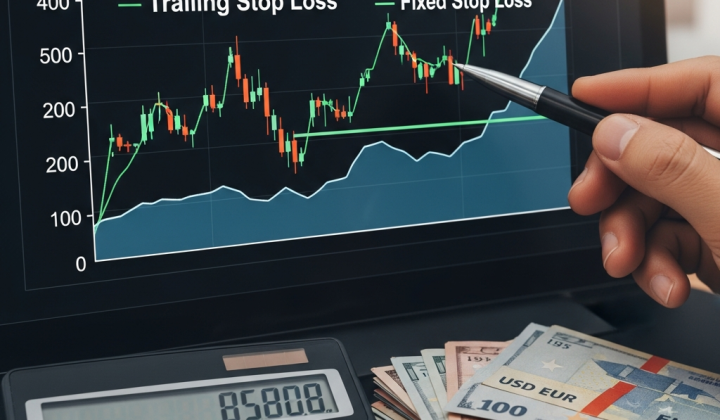
On the other hand, an Anti-Martingale trader sees a breakout. They enter small. The price moves in their favor, confirming their thesis. They add to the position. The price moves further. They add again. If the market suddenly reverses, they have a trailing stop-loss that locks in a portion of the gains. They didn’t risk their whole account on a guess; they scaled into a reality.
In sports betting, the Martingale is often used by those who think a team “can’t possibly lose five in a row.” But as any seasoned fan knows, losing streaks happen. The Anti-Martingale is used by those who spot a team with momentum or a favorable matchup and “press” their winnings during that specific window of opportunity.
Which Strategy Fits Your Soul?
Choosing between these two isn\u2019t just a financial decision; it\u2019s a personality test. You need to be honest with yourself about how you handle stress.
- The Martingale personality: You hate being wrong. You want to win every single time you sit down to trade. You have a large capital base and the discipline to walk away if things get truly insane (though most don’t). You prefer a high “win rate” even if the risk is technically higher.
- The Anti-Martingale personality: You are comfortable with being wrong often as long as you are right big. You have the patience to endure a series of small losses without getting frustrated. You view yourself as a “hunter” waiting for the perfect trend to ride.
Most professional traders I know lean heavily toward the Anti-Martingale side. Why? Because the market is a chaotic system. Any strategy based on the idea that the market “must” do something is inherently flawed. The market doesn’t owe you a win. The Anti-Martingale respects this chaos by only increasing exposure when the market proves you right.
Practical Safety Nets for Any Trader
Regardless of where you land in the martingale vs anti-martingale comparison, there are rules you simply cannot break if you want to be around in 2027.
First, always have a hard stop. A Martingale strategy without a “circuit breaker” is just a slow-motion suicide note for your bank account. You must decide, before you start, at what point you will accept the loss and walk away, no matter how much you want to double down one more time.
Second, manage your emotions. The biggest danger of the Martingale isn\u2019t the math; it\u2019s the panic. When you\u2019ve doubled down four times and you\u2019re looking at a massive red number, your brain stops functioning logically. You enter survival mode, and survival mode makes for terrible trading decisions.
Third, understand your platform’s limits. Many exchanges and bookmakers have maximum bet limits. If you reach that limit during a Martingale sequence, the strategy mathematically fails because you can no longer double your bet to cover previous losses. You are stuck with a massive loss and no way to “recover” it using the system.
The Path Forward
There is no “perfect” system, but there is a system that is perfect for *you*. If you enjoy the thrill of constant small wins and can strictly manage your total exposure, the Martingale might offer a structured way to play. But for the vast majority of people looking for long-term growth and capital safety, the Anti-Martingale approach is the more sustainable path.
It encourages the one habit that all successful investors share: cutting losses short and letting winners run. It turns the natural human tendency to “gamble” into a structured method of compounding success. As we move deeper into 2026, the speed of information and execution will only increase. Choosing a strategy that works with the market\u2019s momentum rather than fighting against it is usually the smartest move you can make.
Take a look at your recent trades. Were you doubling down out of spite, or were you scaling in because you were right? The answer to that question will tell you exactly which side of the martingale vs anti-martingale comparison you\u2019ve been living on\u2014and whether you need to change your map before you reach the end of the road.